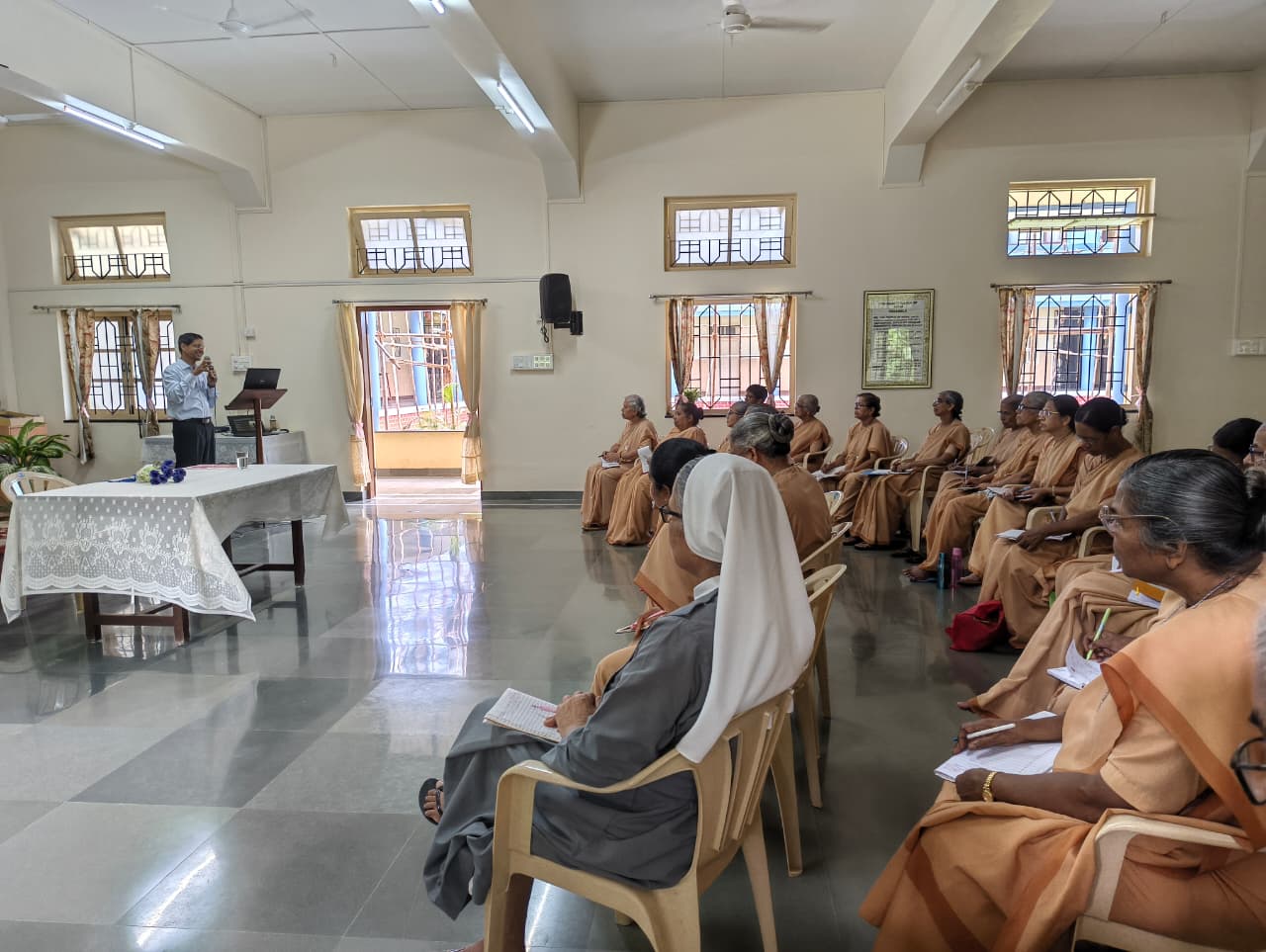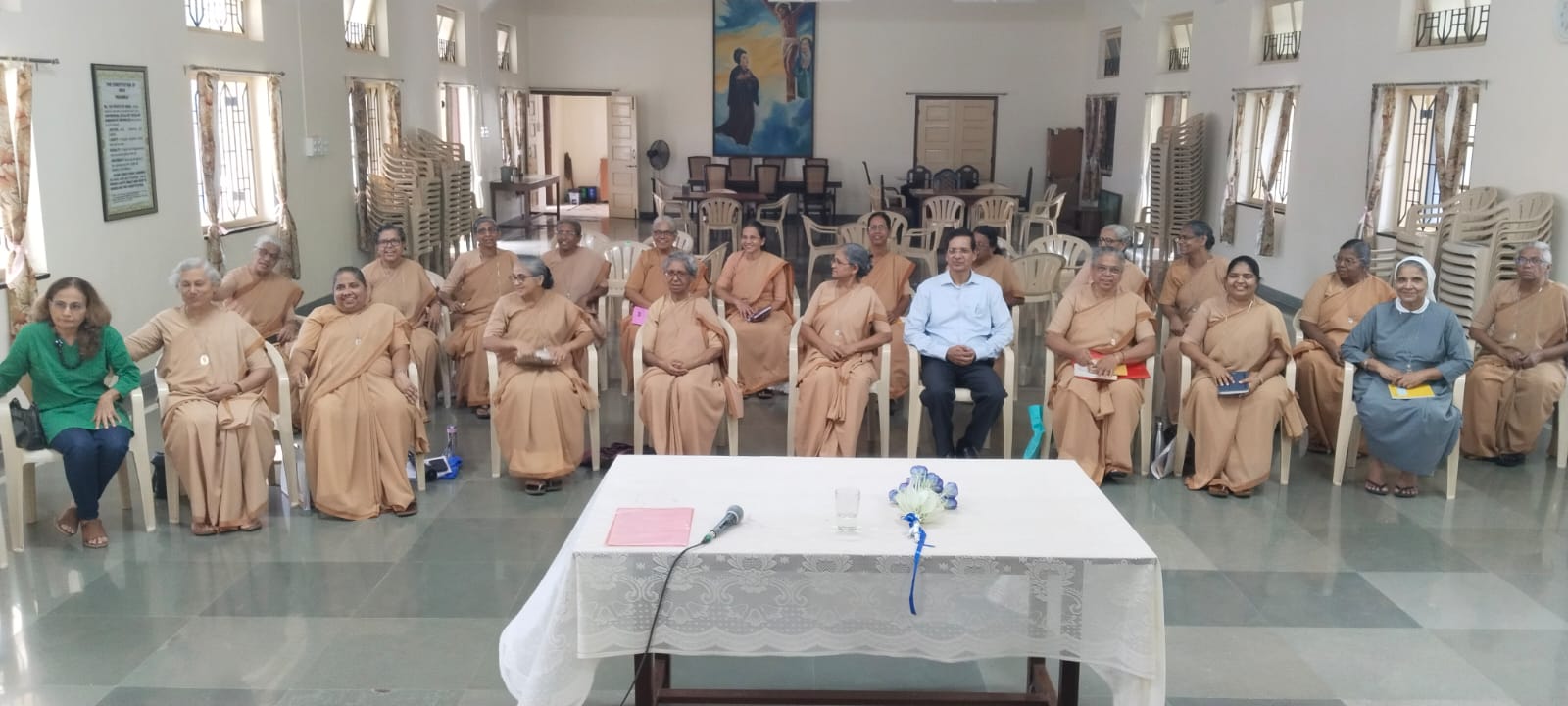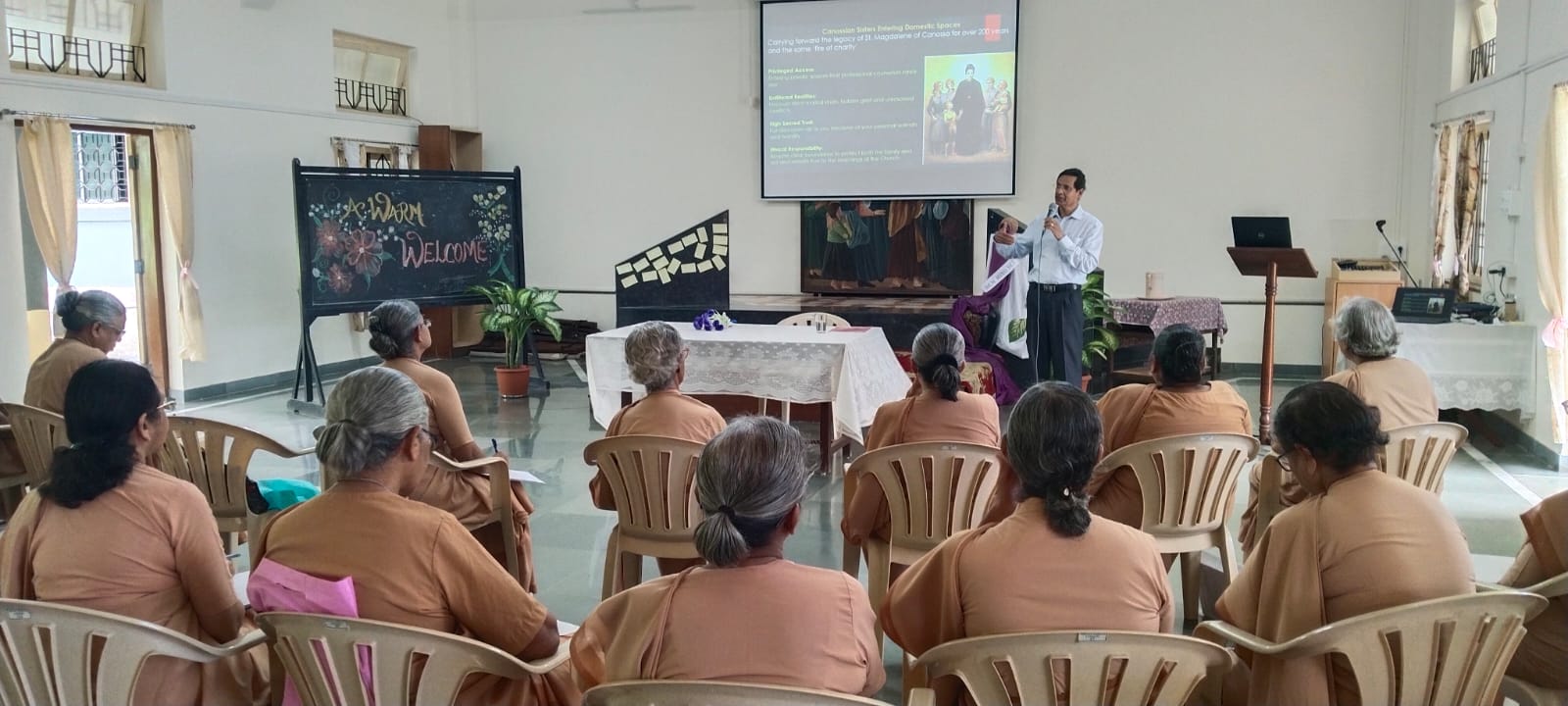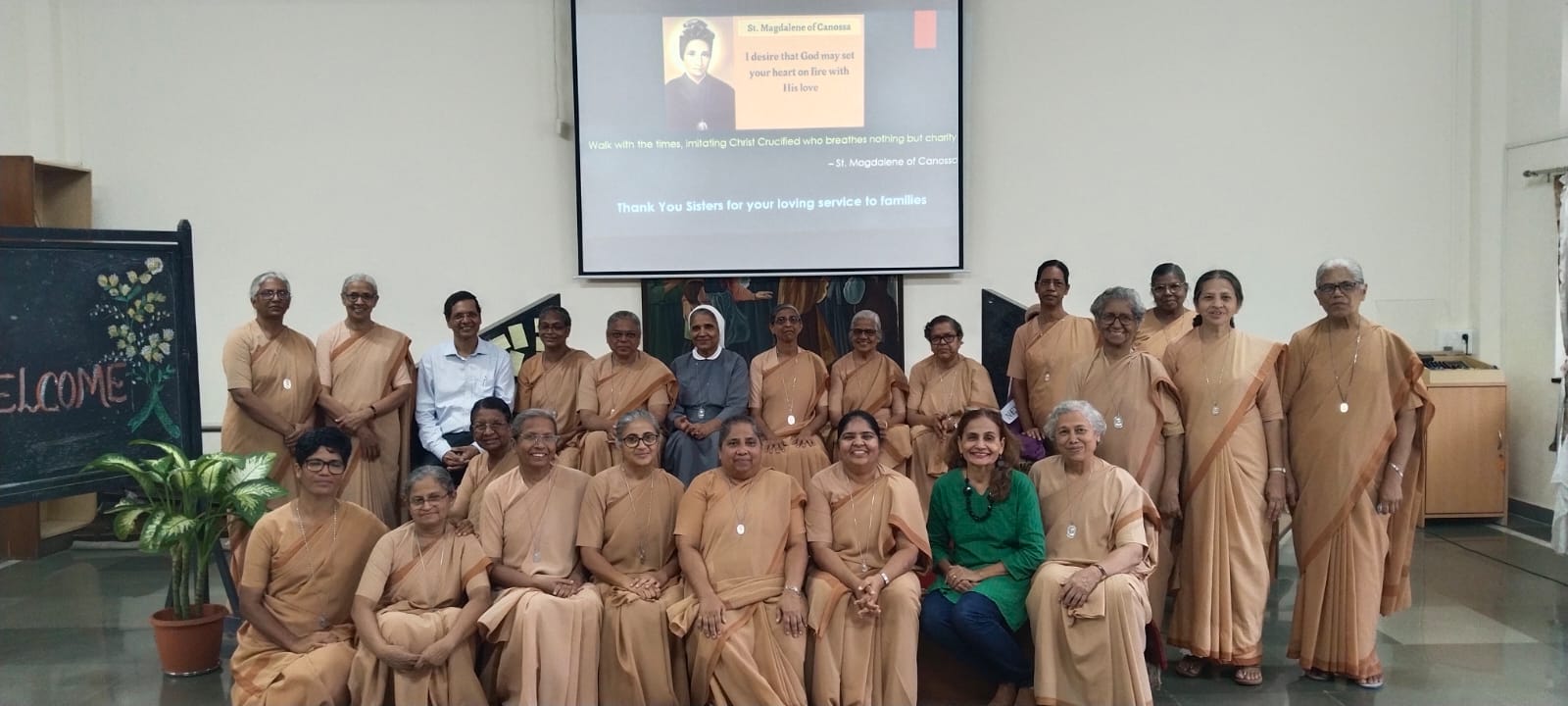
(Mumbai) – On 25 July, a gathering was held, organised by the Canossian Commission for the Pastoral Ministry of Spirituality of the Province of St Francis Xavier, India-Centre, for pastoral ministers, with the aim of exploring the ethical and moral challenges that families face in the areas of marriage counselling, infertility and reproductive technologies.
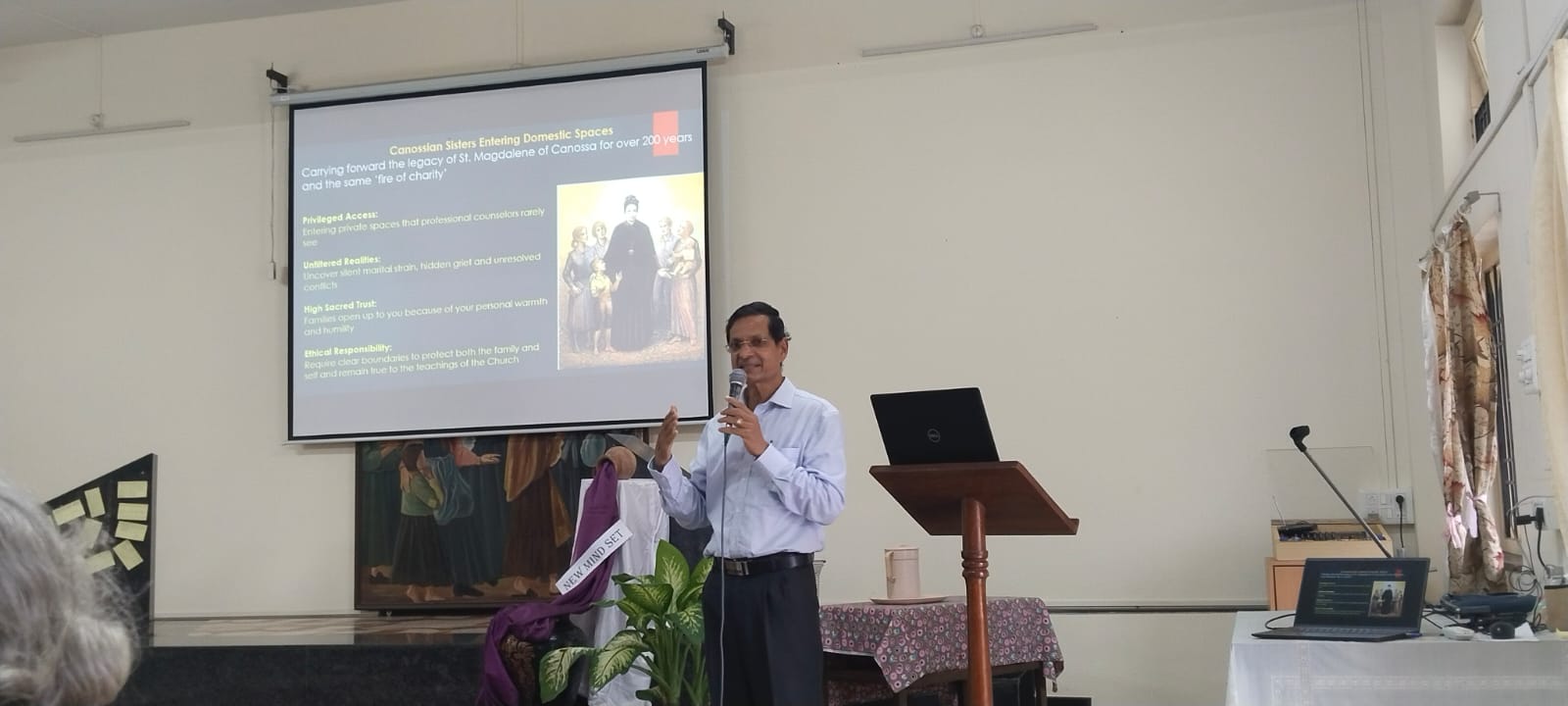
Held at Nirmalashram and Canossa Ashram in Andheri under the theme “Journeying together in faith, love and mission”, the gathering included a session on “ethical issues in family therapy and marriage counselling”, led by Dr Pascoal Carvalho, consultant in diagnostics and healthcare and former member of the Pontifical Academy for Life.
Dr Carvalho addressed the complex bioethical questions emerging from family therapy, marriage counselling, infertility treatment and advances in reproductive technologies. He also urged pastoral ministers to accompany families with compassion, offering ethical guidance rooted in the Church’s teaching on the dignity and sanctity of human life.
The session examined issues such as in vitro fertilisation (IVF), surrogacy, embryo preservation and cryopreservation, gene editing and emerging biotechnologies. Dr Carvalho underlined the need to ensure that scientific and technological progress remains grounded in respect for human life from conception to natural death.
An interactive discussion enabled the Canossian Sisters to share reflections drawn from their pastoral experience. Sr Jacinta Pinto of Goa expressed concern about the destruction of unused embryos in artificial reproduction procedures, observing that many childless couples seeking pastoral accompaniment may not be fully aware of the ethical implications of practices such as IVF and surrogacy.
Sr Belinda D’Cruz of Belgaum highlighted the financial burden of advanced fertility treatments, stressing that couples already suffering emotionally and spiritually can face further pressure because of the high costs involved.
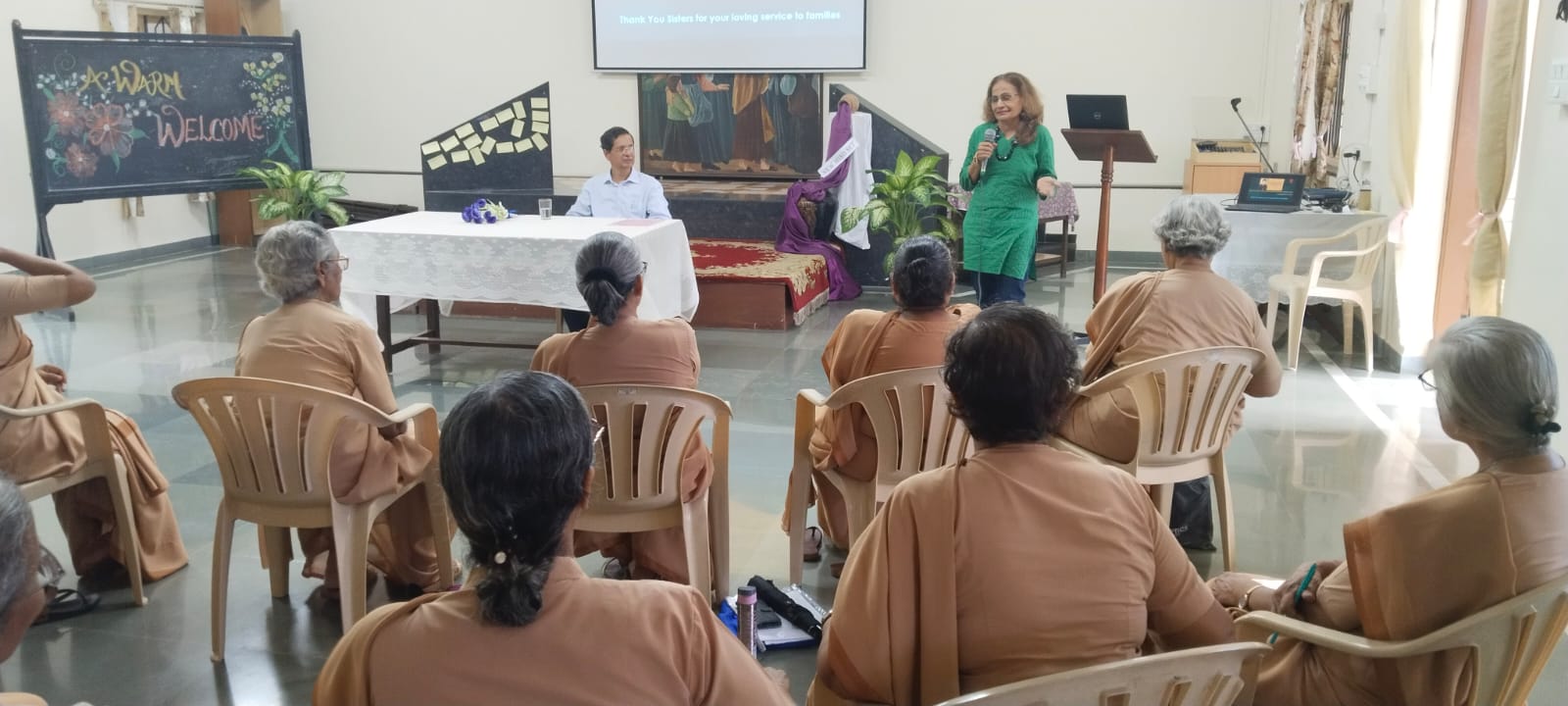
Adv. Sr Meena Godad, provincial councillor, concluded the gathering by reaffirming the Catholic understanding of the sacred origin and inherent dignity of every human person. Referring to Dr Carvalho’s mention of Pope Leo XIV’s *Magnifica Humanitas*, she underlined that every human being is a unique gift from God, created with his or her own purpose and dignity.
While acknowledging the significant advances in science and medical technology, Sr Meena reiterated that scientific progress must always be guided by ethical principles and respect for the sanctity of life. She further noted that every person is unique and created in the image and likeness of God, emphasising the irreplaceable identity and immeasurable worth of every human being. From this perspective, she invited pastoral ministers to ensure that technological capabilities never overshadow human dignity, but remain at the service of life, compassion and the common good.
The gathering concluded with an appeal for pastoral ministers to educate, accompany and support couples facing infertility and marital difficulties. By combining sound medical understanding with compassionate spiritual accompaniment, pastoral workers can help families navigate complex challenges with renewed faith, hope and fidelity to Catholic moral teaching.
By Nirmala Carvalho