

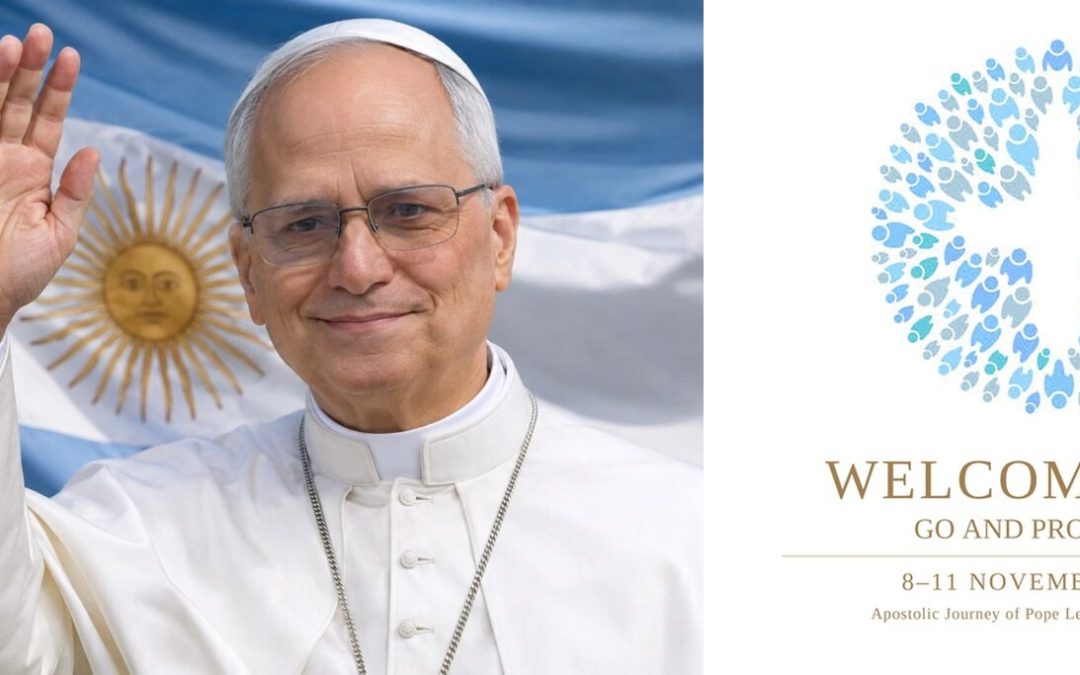
The ecclesial and social community of Argentina is living these days in deep anticipation of the imminent arrival of Pope Leo XIV. Following the official confirmation of his apostolic journey to South America — which will also include Uruguay and Peru — the country is mobilising with fervour to welcome the Successor of Peter in a historic event, rich in pastoral, human and reconciling significance.
A journey of closeness and community preparation
In recent weeks, preparations have multiplied across dioceses, parishes and ecclesial movements. Prayer services, shared reflections and logistical meetings have been organised to coordinate participation in the large-scale Mass, as well as in the planned encounters with young people, the world of work and the most vulnerable sectors of society.
Within this horizon of communion, the various Canossian communities in the country are playing an active role. Following the educational and evangelising charism of Saint Magdalene of Canossa, the Sisters have brought together and organised community journeys with lay people, young people and families who are part of the wider Canossian Family. For many of them, coordinating travel from different parts of the country in order to take part together in the encounter with the Pope is not merely a matter of organisation, but a shared journey of faith, listening and fraternity.
Ecclesial and social significance: a call to reconciliation
For the Church in Argentina, Leo XIV’s visit represents a singular grace and an invitation to renew hope. In a demanding social context, marked by major challenges, the Pope’s presence arrives as a prophetic gesture that calls for priority to be given to the most vulnerable and for a culture of encounter to be promoted.
“This visit is not merely an institutional event, but a gift that calls us to be a Church that goes out, capable of embracing the peripheries and placing the care and dignity of every person at the centre.”
— A religious sister from a local Canossian community
From an ecclesial perspective, the encounter strengthens bonds of unity and encourages the Church’s communal mission. It shows how faith becomes incarnate in daily life through accompaniment, closeness and educational and social commitment.
Towards an encounter that renews faith
In the days leading up to the Holy Father’s arrival, the atmosphere in the communities is one of profound joy and gratitude. The groups finalising the details of their journeys, prayer in the churches and the shared commitment of religious and lay people reflect the desire to live this experience as a true spiritual renewal, capable of strengthening the journey made together.