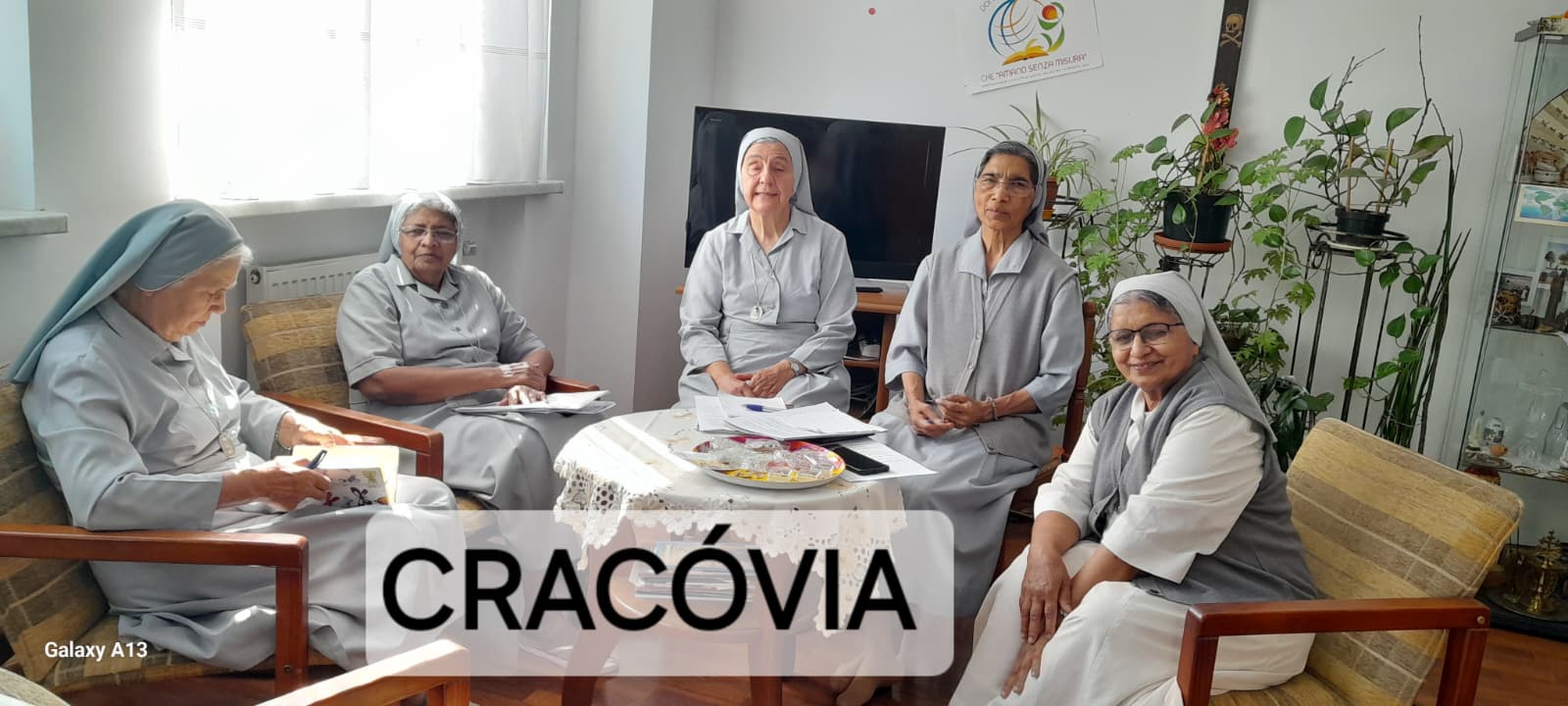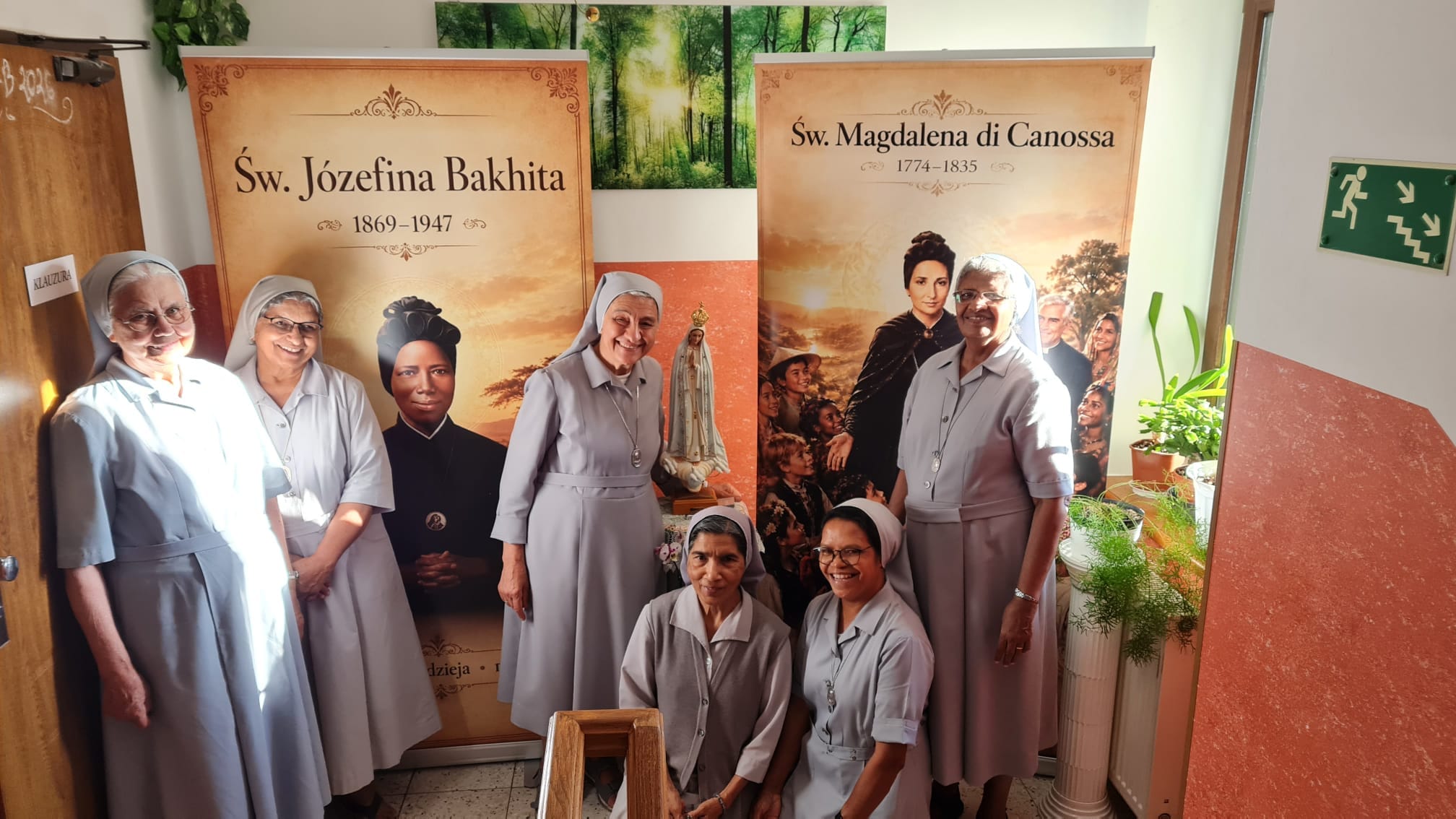
(Gosławice/Krakow) – From 27 to 30 July 2026, the community of the Daughters of Charity of Saint Mary Magdalene of Canossa in Poland welcomed the canonical visit of Mother Josemary, General Vicar of the congregation. The stay took place between the Retreat House of Gosławice, near Tarnow, and the community of Saint John Paul II in Krakow, and concluded with the departure of the General Vicar for Vimercate, seat of the European Delegation “Mother Ecclesia”.
Welcome and opening of the visit
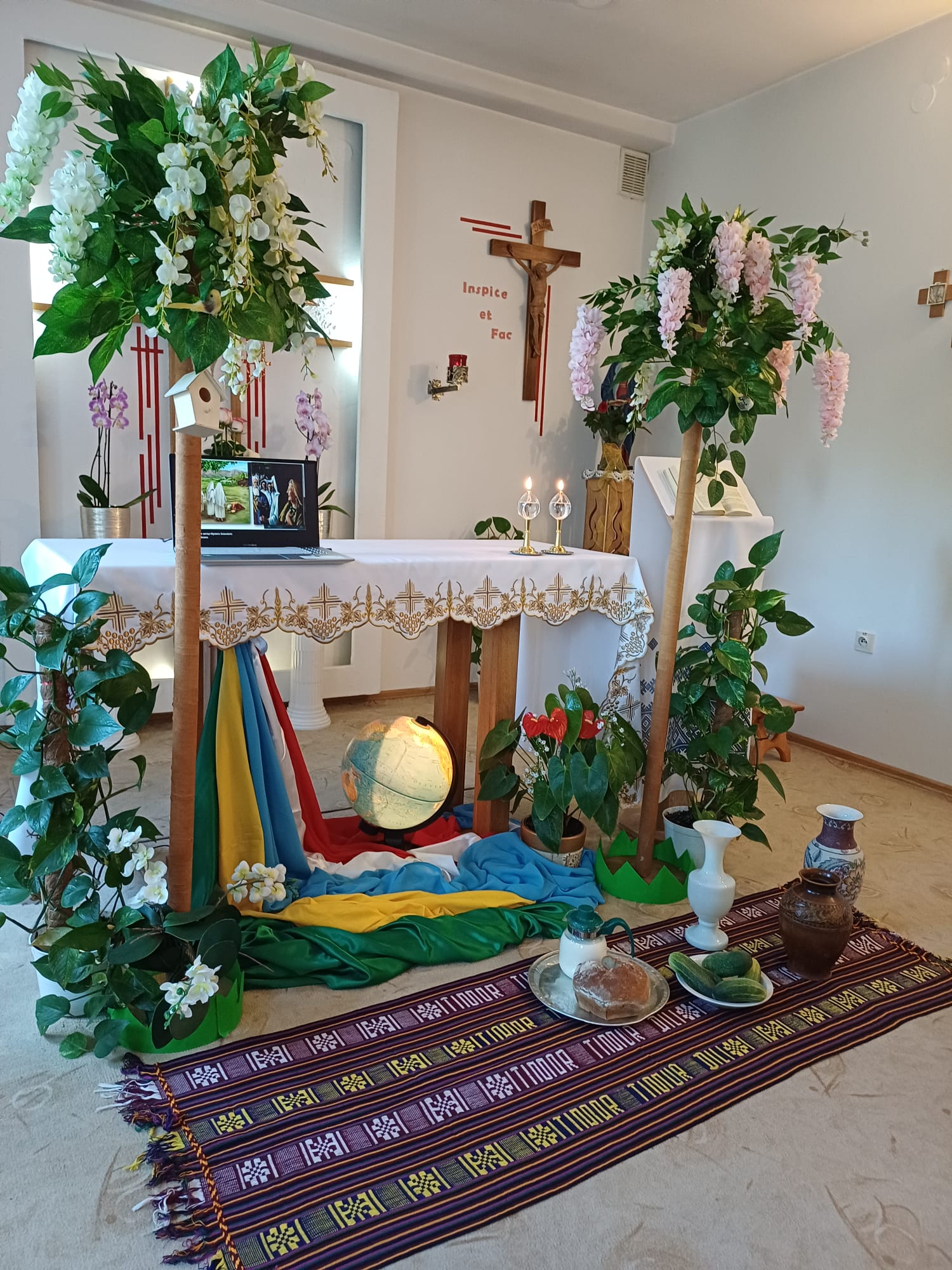
On arrival in Gosławice on 27 July, the sisters welcomed Mother Josemary according to the Polish tradition reserved for important guests: at the entrance, bread and salt were offered, a sign of hospitality and sharing. Those present then ate together the bread and salt offered, before taking their leave.
With a prayer meeting, the communities began the days of the canonical visit, invoking the Holy Spirit to act in them, to make even the “desert” blossom and to give new life. The opening text reads: “It is the Lord who, in the person of Mother Josemary, visits us”, in continuity with God’s visits in the history of salvation, particularly with Abraham’s encounter with the three pilgrims at the Oaks of Mamre. In the light of this biblical episode, the sisters welcomed the General Vicar “in the name of the Lord, as his special messenger”, hoping that these days of “visit, fraternity and blessing” might bring “fruits of grace and new life” to the community and to each sister.
Course of the canonical visit
Mother Josemary, General Vicar, left Rome on 27 July 2026 and arrived at the Retreat House of Gosławice, in Tarnow. From 27 to 30 July she met five Canossian sisters present in Poland: three from the Retreat House of Gosławice and two from the community of Saint John Paul II in Krakow. During the four days of the visit, the two communities lived together in Gosławice, sharing moments of prayer, dialogue and fraternity.
On the morning of 30 July 2026, at 6:00, the sisters accompanied Mother Josemary from the Retreat House of Gosławice to the community of Saint John Paul II in Krakow, to complete the canonical visit. During this stage, opportunities were also taken to make pilgrimages to the shrines of Saint John Paul II, of Divine Mercy and of Saint Faustina, all linked to the spirituality and recent history of the Church in Poland.
On 31 July, at 9:00, Mother Josemary, General Vicar, and Mother Monica departed for Vimercate, seat of the European Delegation “Mother Ecclesia”.
Meeting with the sisters and with Canossian lay people
On the second day of the visit, two distinct moments took place: in the morning a meeting with the sisters of the two communities and, in the afternoon, a meeting with a small group of Canossian lay people.
To the lay people, Mother Josemary recalled that the Canossian charism is the same for all members of the missionary family, while the ways of serving may differ. She reaffirmed Magdalene of Canossa’s intuition: “to present Jesus to brothers and sisters who do not love him because they do not know him”. Among the concrete forms of collaboration, the following were indicated:
- – evangelisation;
- – service to the poor;
- – education;
- – youth ministry and parish ministry;
- – spiritual formation.
It was emphasised that the relationship between sisters and lay people must be marked by communication, respect, dialogue, trust and mutual responsibility. The original text includes the expression: “Only the charism evangelises diversity”.
Meaning of the canonical visit
The canonical visit, provided for by canon law, is the moment when a superior (female or male) visits the places where the members of the congregation carry out their mission, in order to know in detail the journey of each community and of each sister. The communities also understood this appointment as an opportunity to share their missionary experience, enrich the common charism and strengthen the commitment to make Jesus known to those who still do not love him because they do not know him.
The account of the welcome explicitly recalls the episode of Abraham: just as he, without worrying about the identity or origin of the guests, offered all he had to the three pilgrims, so the two small Polish communities – five sisters in total, distant from each other – welcomed Mother Josemary with simplicity and generosity, testifying to the reality of community life and of the Canossian mission even in a context of small numbers and geographical distances.
Conclusions and sending forth
At the end of the canonical visit, Mother Josemary reminded the sisters that, although the formal moment of the visit was coming to an end, the life of the community continues. She invited them to go forward with courage, always seeking to: “rediscover, begin again, strengthen, remember, renew, relive”.
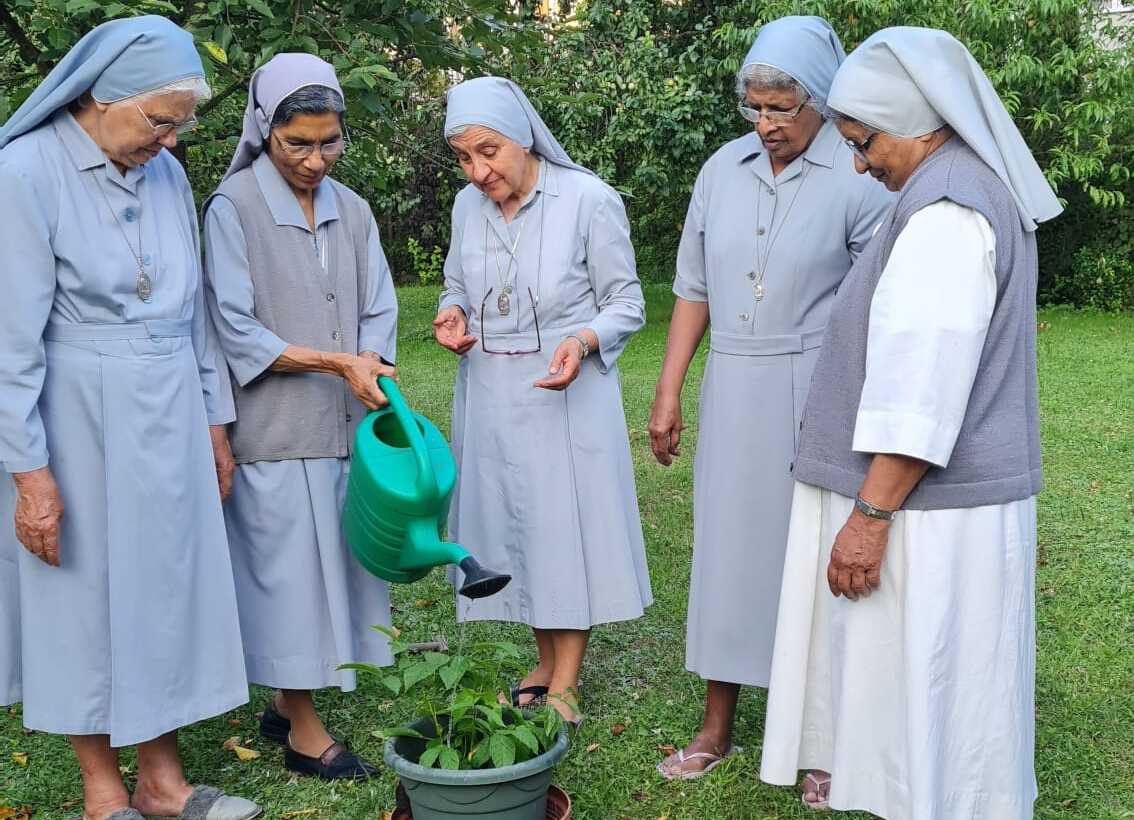
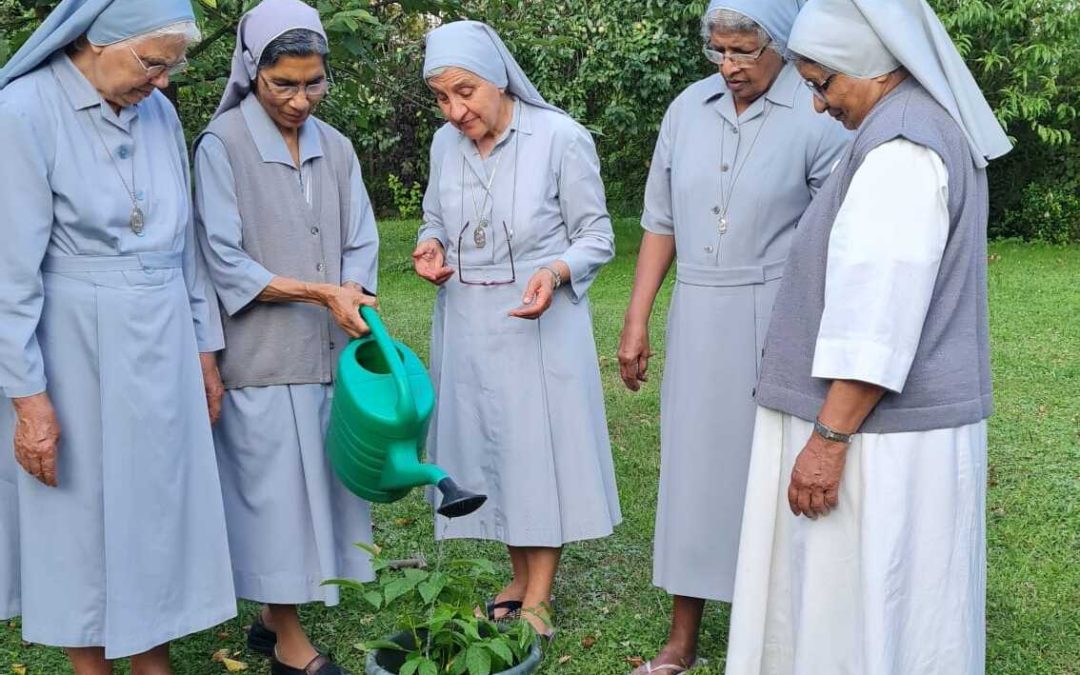
As a symbolic gesture of hope for the future, the sisters planted a tree together with the General Vicar, a sign of the Canossian mission in Poland and of the commitment to “water” and keep the charism alive in this country.
The communities expressed gratitude to Mother Josemary for the four days spent together and for the experiences shared, which gave them new courage to continue to be present as Canossians in Poland, even in small realities and in daily tasks.