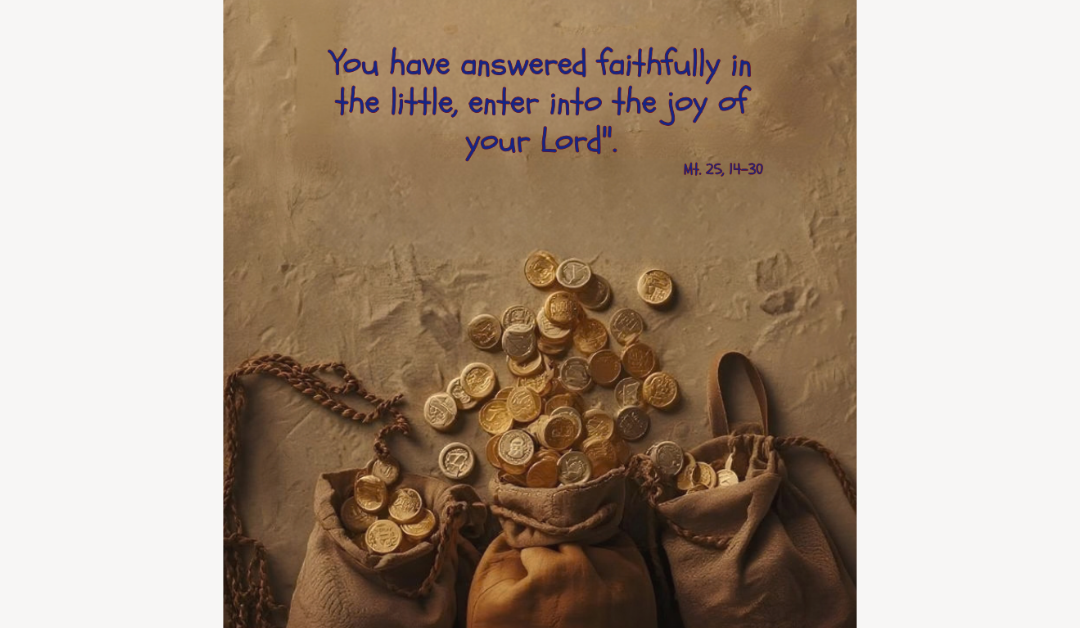
In the parable of the talents, each servant receives a measure of responsibility commensurate with their ability to administer their master’s goods. The decision each one makes is not merely an administrative act, but the mature fruit of their freedom and spiritual maturity. We know that God is infinitely just and that servile fear has no place before him, for perfect love casts out fear.
Nevertheless, the attitude of the last servant reveals a profound crisis of faith: his inaction stems from a distorted view of his Lord. He experiences a paralysing fear in the face of his presence; he claims to know him, but this is merely theoretical knowledge, which does not touch his heart and therefore neither prompts him to take risks nor to trust.
This reality is strongly reflected in our daily lives. We often believe that we know God, yet we distance ourselves from him out of fear of confession or shame at our weaknesses. Like the third servant, we prefer to “bury” our reality rather than expose it to the light of his mercy. We forget that every gift we receive is a caress of his love, and that its sole purpose is to be multiplied for the benefit of our brothers and sisters, especially the poorest and most vulnerable. Authentic faith does not hide for fear of failure, but takes risks in service, knowing that the greatest loss is never to have loved.
33rd Sunday in Ordinary Time – World Day of the Poor: “You have been faithful in a small matter; enter into the joy of your Lord”