


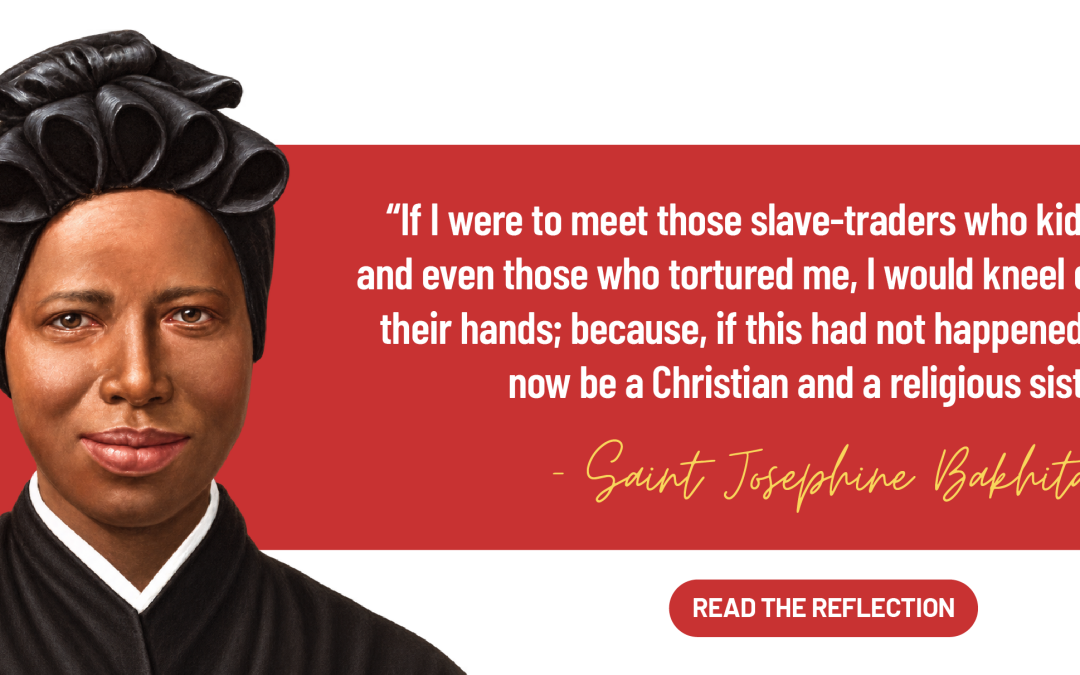
“Bakhita, an existential parable of forgiveness.” — Pope Francis
Some stories speak for themselves. Josephine Bakhita’s is one of them. Pope Francis summed her up in a phrase that’s short but carries huge weight: she is an existential parable of forgiveness. Not a theory, not a nice speech. An entire life that was, in itself, the answer. That’s why it’s no coincidence she’s one of the patrons of World Youth Day 2027 in Seoul.
When life strips away everything, even your name
Bakhita was born in Sudan in the 19th century. She was still a child when she was kidnapped and sold into slavery. She suffered violence and abuse that left marks on her forever. Even her name was taken from her: “Bakhita” — which means “the fortunate one” in Arabic — was given to her by her own captors. A cruel irony.
You’d expect a story like that to end in anger and total distrust. But that’s not what happened with Bakhita.
The turning point that changes everything
When she arrived in Italy, she encountered the Christian faith and found there the words for something she already felt inside: that you can be free not only from physical chains, but from the invisible chains of hatred and resentment. She became a religious sister and dedicated her life to serving others, especially the poor.
When asked what she would do if she ever met the people who had enslaved her, she said she would kneel down and kiss their hands, because without that story she would never have come to know God or become who she was.
That’s the heart of it all: she decided that her story would not be defined by suffering, but by what she did with it.
Why “a parable”?
A parable doesn’t preach: it shows you something and leaves you thinking. That’s why Francis didn’t say Bakhita taught forgiveness — he said she was forgiveness lived out. And she leaves us with an uncomfortable question: can you forgive the unforgivable? Bakhita doesn’t answer with theory. She answers with her story.
On the way to Seoul
Thinking about Bakhita also means looking inward: our own wounds, grudges, the distance we keep from people who’ve hurt us. And asking ourselves if there’s a path — slow, difficult, but real — toward the inner freedom she reached. Because forgiving isn’t forgetting or being weak: it’s refusing to let the past decide who we are.