

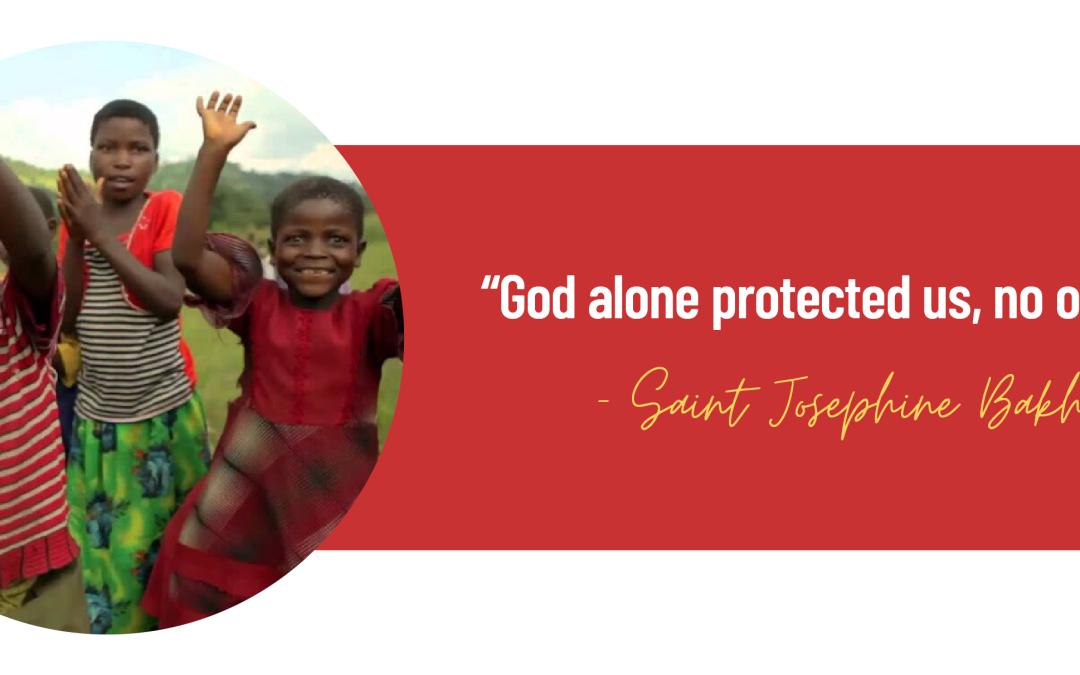
These words of Saint Josephine Bakhita do not come from someone who theorises about providence, but from someone who knew slavery on her own flesh. Kidnapped as a child in Darfur, sold several times and marked by scars she carried throughout her life, she saw others dispose of her as though she were an object.
‘God alone.’ Bakhita does not deny the pain: there were beatings, humiliation and fear. What she affirms is that, amid it all, a presence upheld her dignity when no human being could or would do so. This protection did not take away her suffering, but it prevented suffering from having the final word.
‘No one else.’ This is the hardest part of the sentence: it speaks of the loneliness of those who suffer, and of a world that looks the other way. Yet no resentment took root in Bakhita. She came to say that she would have forgiven her kidnappers, because through them she had come to know God. She did not justify evil, but neither did she allow it to define her.
A name reclaimed. ‘Bakhita’, meaning ‘fortunate’, was given to her by her kidnappers, almost ironically. By the end of her life, that word had become truth: God had loved her and had restored her identity.
For today. To those who suffer, the phrase says that they are not abandoned. To those with eyes to see, it asks that we do not become part of the ‘no one else’: today, millions of people live in situations of modern slavery, and each of us can be a sign of God’s protection for them.
Saint Josephine Bakhita, teach us to trust when no one seems to walk beside us, and to be a protecting hand for the most vulnerable. Amen.