Shën Vlash — Some journeys begin long before departure and continue even after returning home. The pilgrimage in Albania, *In the Footsteps of the Martyrs*, was one such journey.
A journey that began months earlier
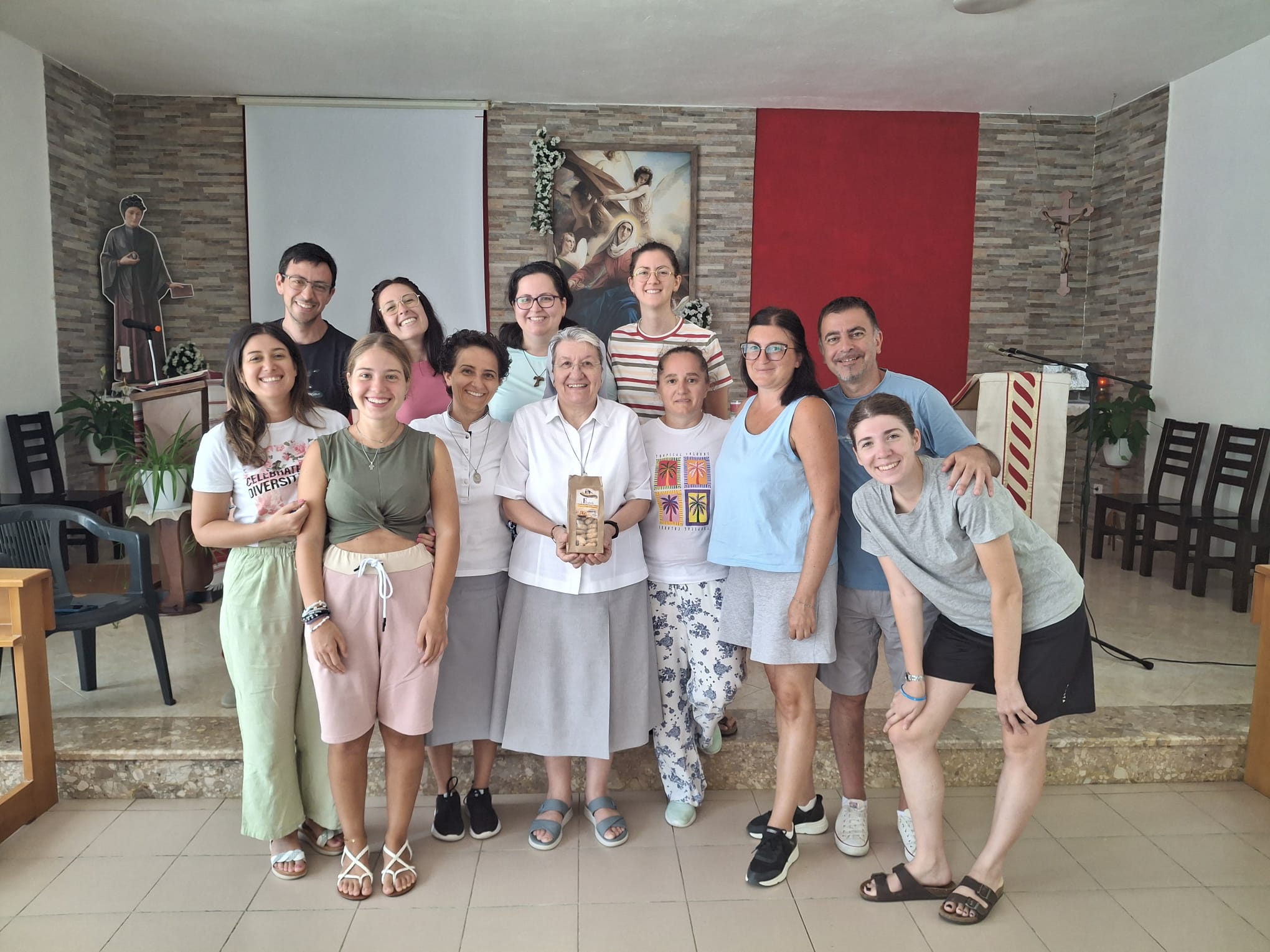
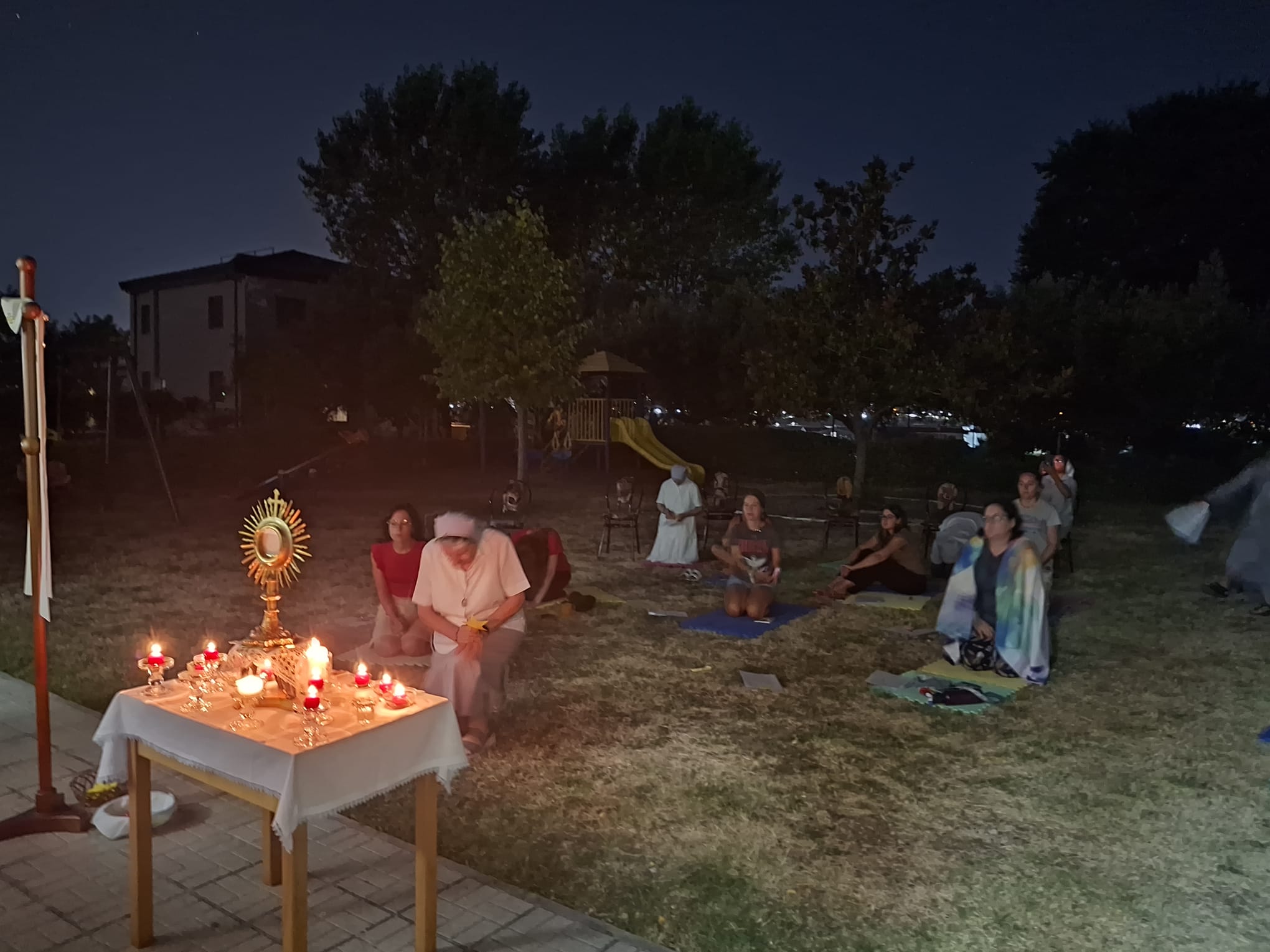
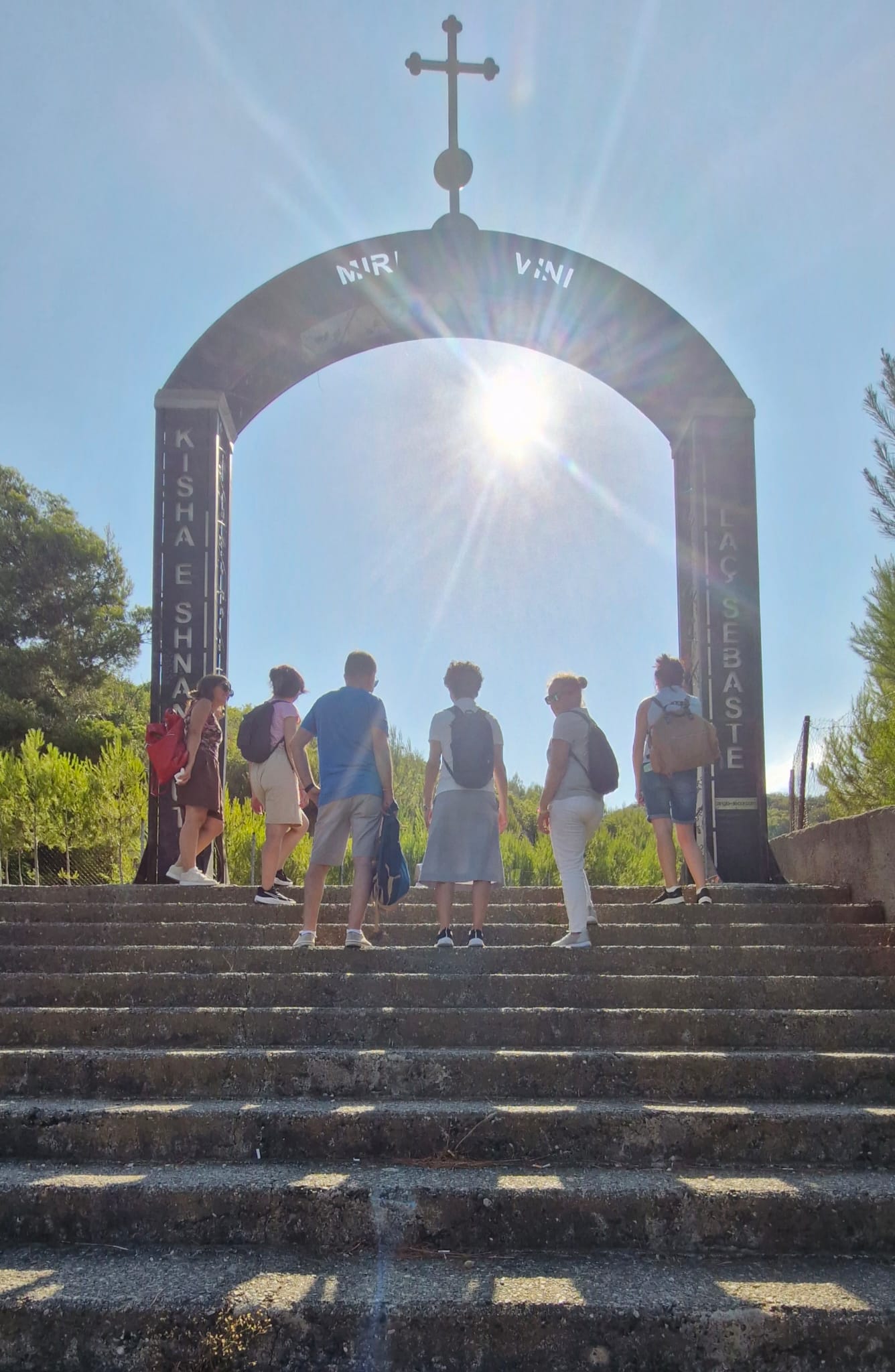
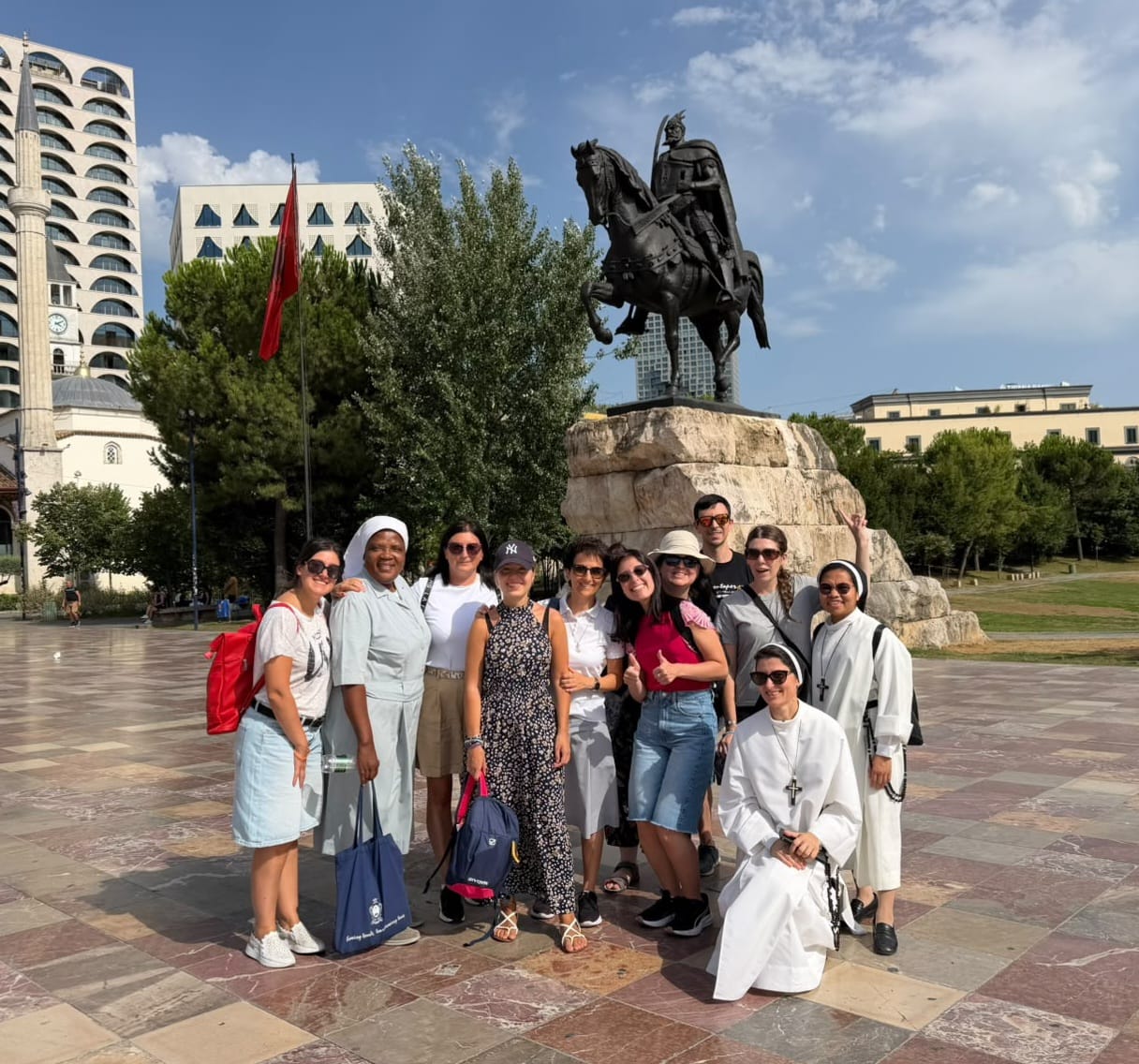
A group of young people aged between 22 and 35 from the dioceses of Foggia, Nola and Mantua took part in the experience. They came from different backgrounds and were motivated by different reasons, but shared a common desire: to set out on a journey. Some were seeking a deeper relationship with God; others were driven by curiosity to discover a land and its history; still others simply had questions to carry with them.
The journey to Albania was the culmination of the programme *Connected… The Art of Weaving Bonds by Walking Together*, which had accompanied the group throughout the previous year under the guidance of Sister Filomena Rispoli and Sister Maria Cancilleri, of the Canossian Sisters.
From 25 July to 1 August, the young people were welcomed by the Canossian community in Shën Vlash, near Durrës. More than simply a place to stay, it soon became home. Five Sisters, each from a different country—the Philippines, Argentina, the Democratic Republic of the Congo, Timor-Leste and Italy—welcomed them with a simplicity that broke down every barrier, inviting them into the daily life of their mission and of the local people.
It was through these encounters that the group began to discover Albania in a truly meaningful way.
A history marked by persecution
Behind the landscapes, the cities undergoing transformation and the contradictions of a country rushing towards the future, the young people encountered a history deeply marked by the communist dictatorship. For many years, every expression of religious faith had been suppressed; places of worship had been closed or destroyed, and many people had been imprisoned, tortured or killed simply because they refused to renounce their faith.
Yet when history takes on a human face, it ceases to be something found only in books. This became clear when the group listened to the testimony of Mr Koll, aged 92. In his face, marked by time, and in his words, they encountered the memory of someone who had lived through those years personally: the pain of losing loved ones, fear, deprivation, but also a faith preserved in silence and never completely extinguished.
His testimony helped the young people understand how, during the darkest moments, it was often ordinary people who safeguarded what seemed destined to disappear.
In Shkodër, following the martyrs’ footsteps
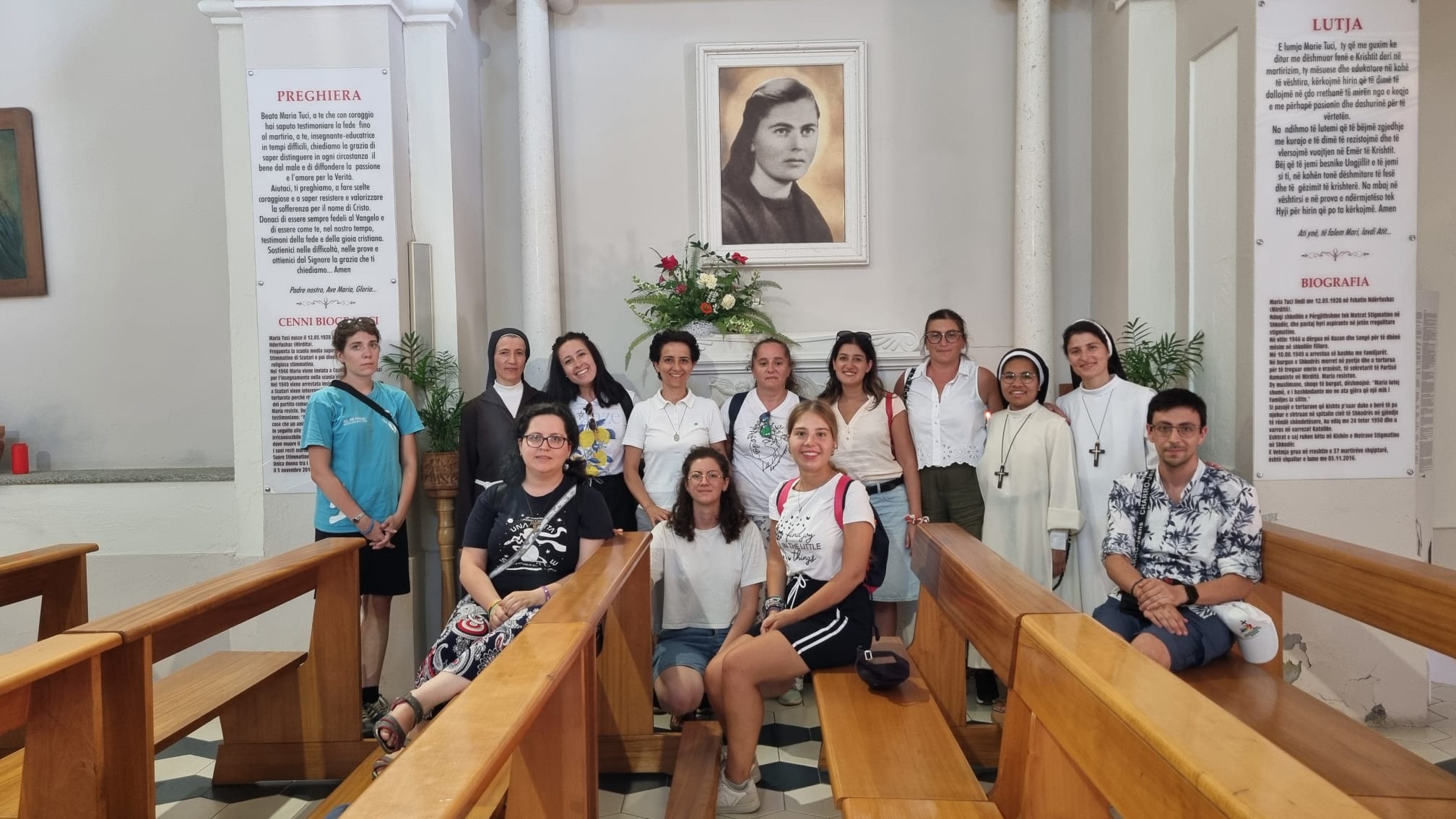
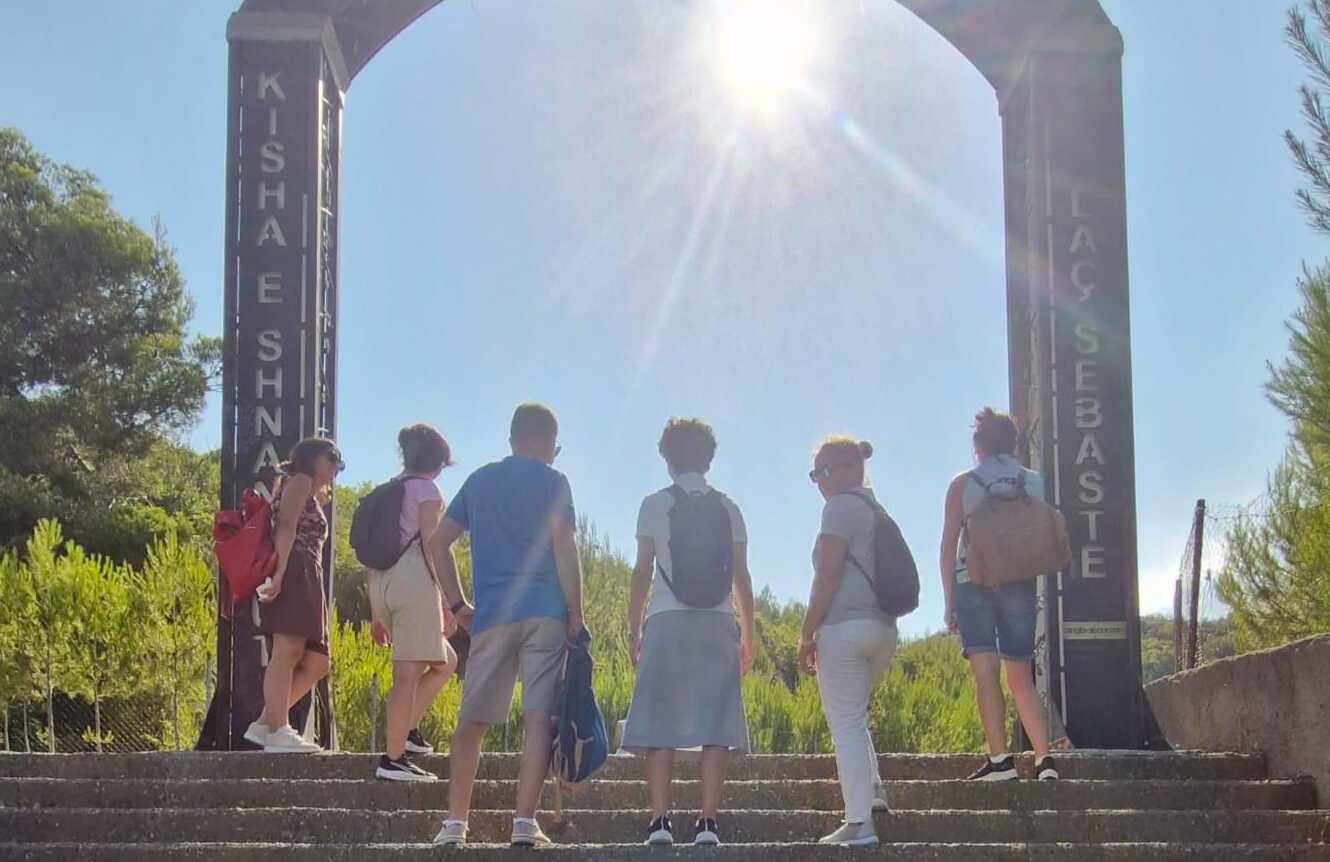
The memory of the martyrs accompanied the group most powerfully in Shkodër, in places that had once been converted into prisons and torture sites. Here, the story of Blessed Maria Tuci and of the many men and women who suffered persecution confronted the young people with a difficult question—one that is impossible to avoid: how much are we truly willing to risk for what we genuinely believe in?
The journey, however, did not speak only of the suffering of the past. It also revealed a country capable of rising again.
An Albania being reborn
In the streets of Tirana, Durrës, Krujë and Shkodër, the young people encountered a youthful, vibrant Albania, full of contrasts. Alongside the still-visible wounds of the past, they discovered a desire to rebuild, move forward and look to the future without erasing memory.
One of the most beautiful surprises was discovering the coexistence of different faiths. Mosques, Catholic churches and Orthodox churches bear witness today to a land where Christians and Muslims have learnt to respect one another and, often, to share important moments in each other’s traditions.
The testimony of Eralda Kasmi, a young Muslim woman, showed concretely how fraternity can be stronger than differences. She spoke of Christians and Muslims who are able to share in one another’s celebrations—from Christmas to Ramadan—without renouncing their own identities.
During those days, the word the group experienced most deeply was *encounter*: encounter with a little-known history, with a faith maintained at a very high cost, with people capable of welcoming others without asking anything in return, with a different culture and, inevitably, with themselves.
Meeting Mother Sandra Maggiolo
One of the most significant encounters was with Mother Sandra Maggiolo, Superior General of the Canossian Daughters of Charity, who was in Albania during those days for the canonical visitation of the community.
For the young people, this was not merely an encounter with someone who holds an important responsibility within the Institute. Above all, it was an encounter with a woman able to explain simply what it means today to live the charism of Saint Magdalene of Canossa and to feel part of a family that reaches across countries, cultures and profoundly different contexts.
In her words, the value of encounter returned repeatedly: approaching others without expecting them to be like us; allowing ourselves to be challenged by their stories; and learning to welcome differences not as obstacles, but as a source of richness. After spending time among Christians and Muslims and learning about a land marked by religious persecution, this perspective took on an even deeper meaning for the group.
Mother Sandra also helped the young people to understand that mission does not simply mean doing something for someone. Before activities come people, listening, closeness and the ability to walk alongside others. This was precisely what the group saw in the daily presence of the Canossian Sisters in Albania: in the education of young children, their care for families, their closeness to those experiencing vulnerability and their ability to share in the lives of the people.
It was particularly meaningful to see Mother Sandra meet the community not from a distance, but by entering into its everyday life. Through songs, dances, testimonies and simple gestures of affection, children, young people, families and collaborators showed her the living face of a mission built day by day.
That celebration was not simply a joyful occasion. It showed, in a tangible way, how a bond can grow when people feel welcomed, recognised and part of the same story.
Her testimony added another piece to the pilgrimage. After listening to the stories of those who had defended their faith at an exceptionally high cost, the young people found themselves facing a question addressed to the present: what will we do with the freedom we have received?
To preserve the memory of the martyrs, then, does not simply mean remembering what happened. It means transforming that memory into responsibility: choosing dialogue instead of isolation, welcome instead of prejudice, and closeness instead of indifference.
Perhaps this was one of the most valuable lessons of the encounter with Mother Sandra: it is not enough to visit places and listen to testimonies. We must allow what we have encountered to change the way we stand alongside others.
Preserving memory, returning transformed
The community of Shën Vlash, Father Geoffrey Bugeja, the Stigmatine Sisters, the Poor Clares, the Dominican Sisters and all the people encountered along the way each contributed a small part to this experience.
These were not simply encounters to add to an album of memories. Each one left something behind.
The group encountered poverty and contradictions, but also dignity, pride, welcome and an extraordinary ability to begin again. They saw how precious freedom—often taken for granted—can become when someone explains what it means to have paid a high price for it.
The young people had set out intending to follow in the footsteps of the Albanian martyrs. In the end, they discovered that those footsteps belong not only to the past. They continue in the people who preserve the memory, in the communities that rebuild, in the young people who choose dialogue and in all those who continue to believe that differences can become an opportunity for encounter.
Perhaps this is precisely what a pilgrimage is for: not simply to reach certain places, but to allow those places, stories and people to reach those who are making the journey.
The group returned from this experience carrying small seeds to help bring to life. And who knows—perhaps one day the roads will lead them back there, not only to return to Albania, but to rediscover a part of what Albania left within each of them during those days, and to live it with a renewed awareness.