
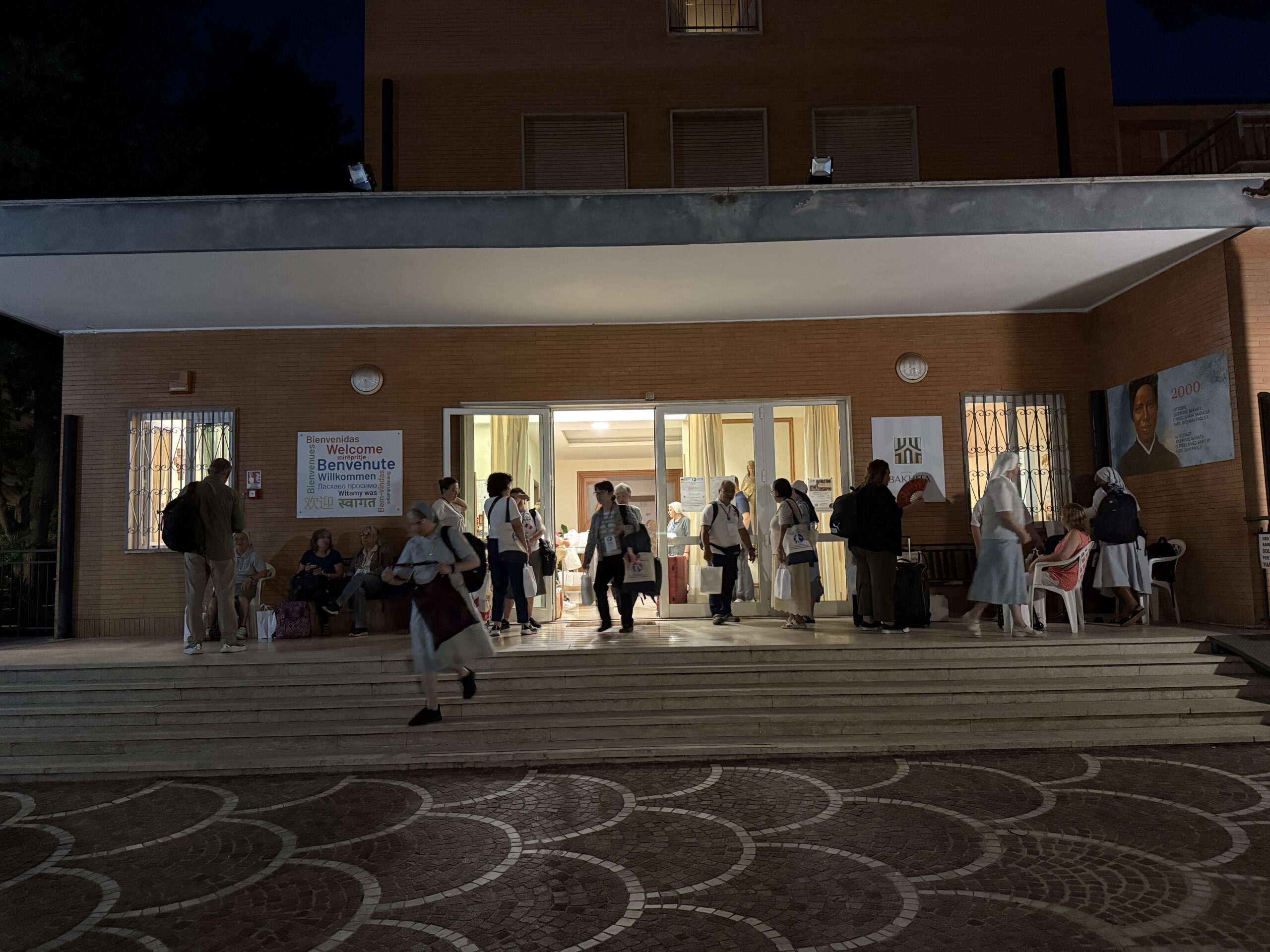
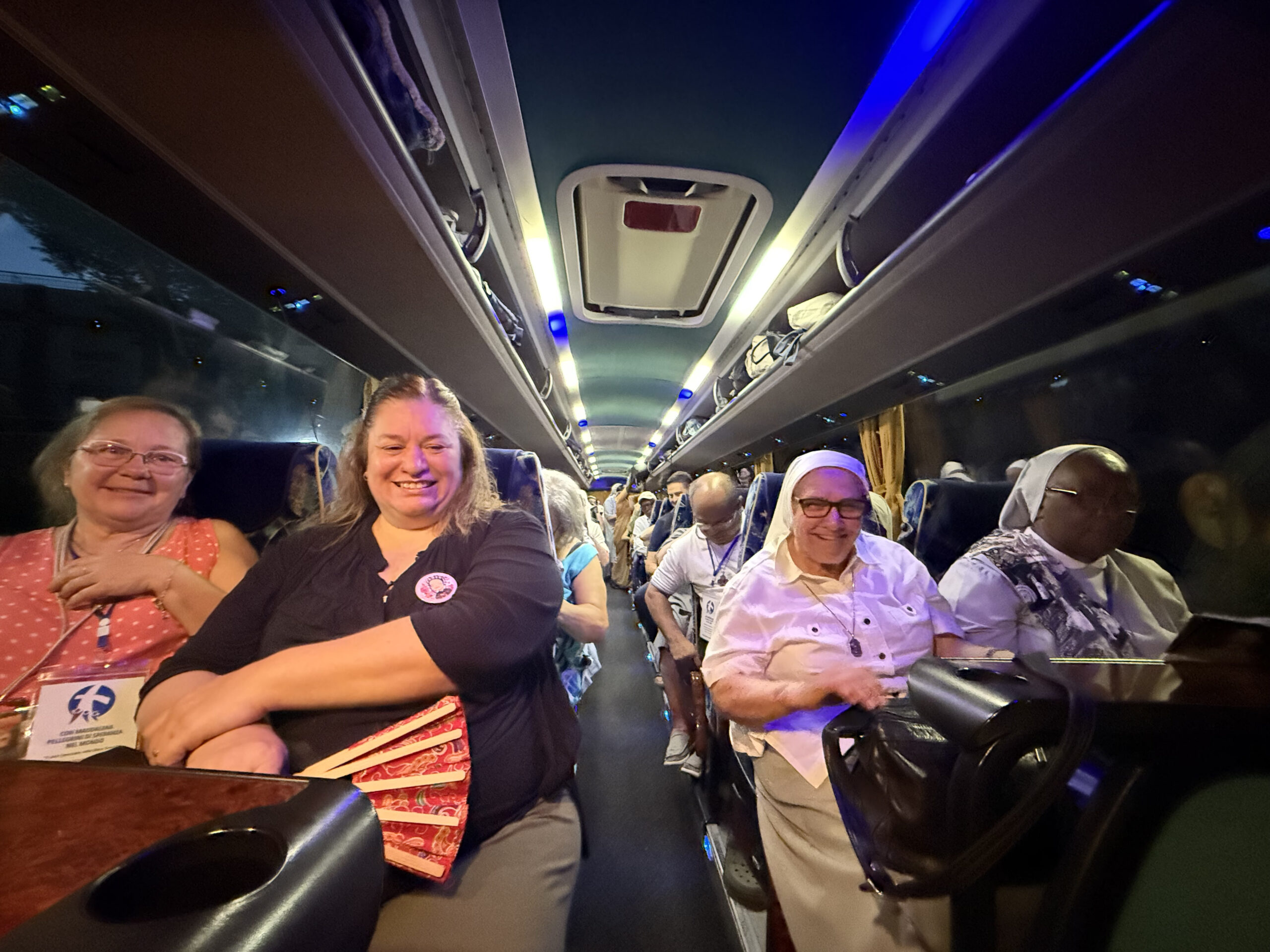
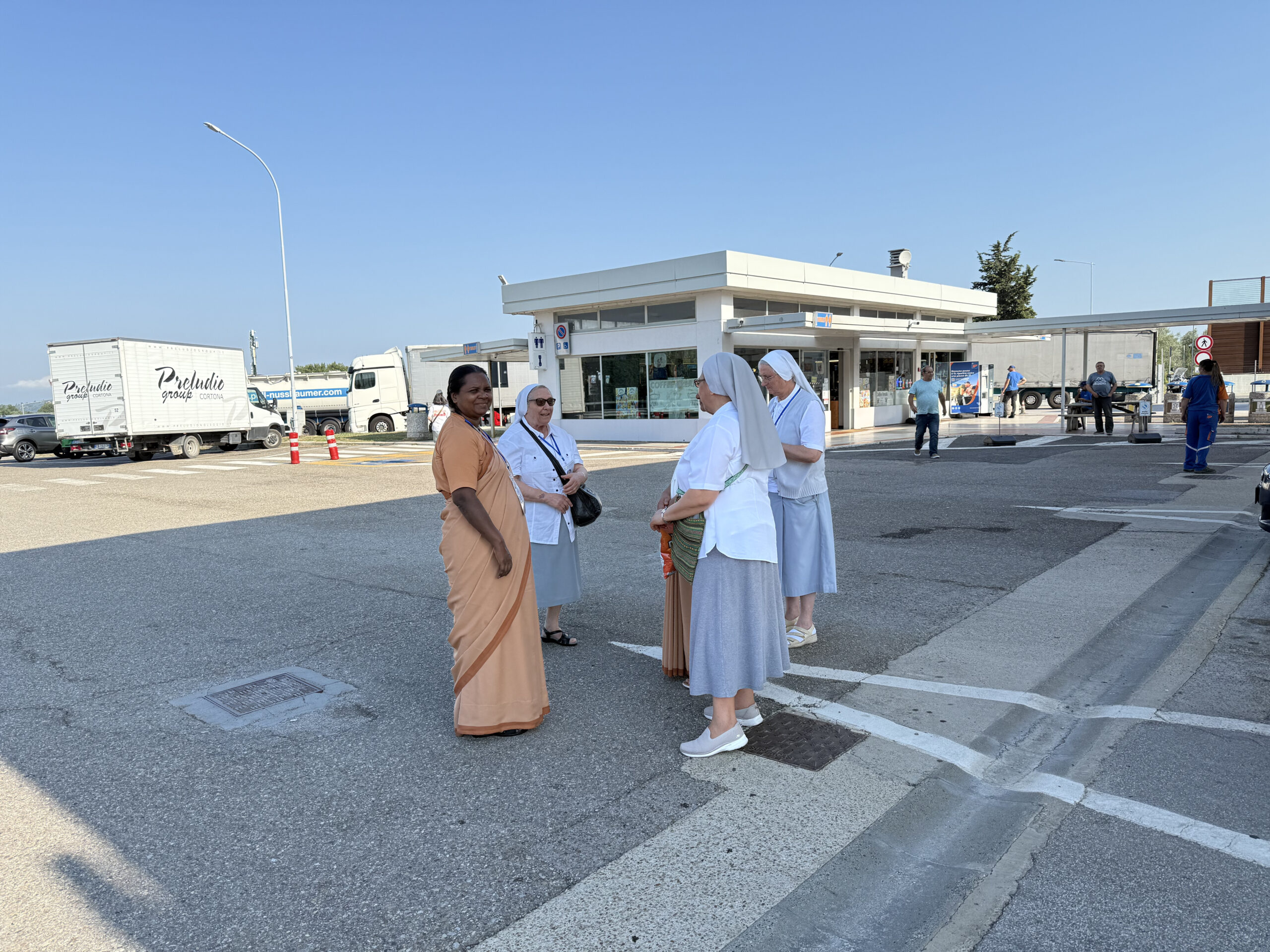
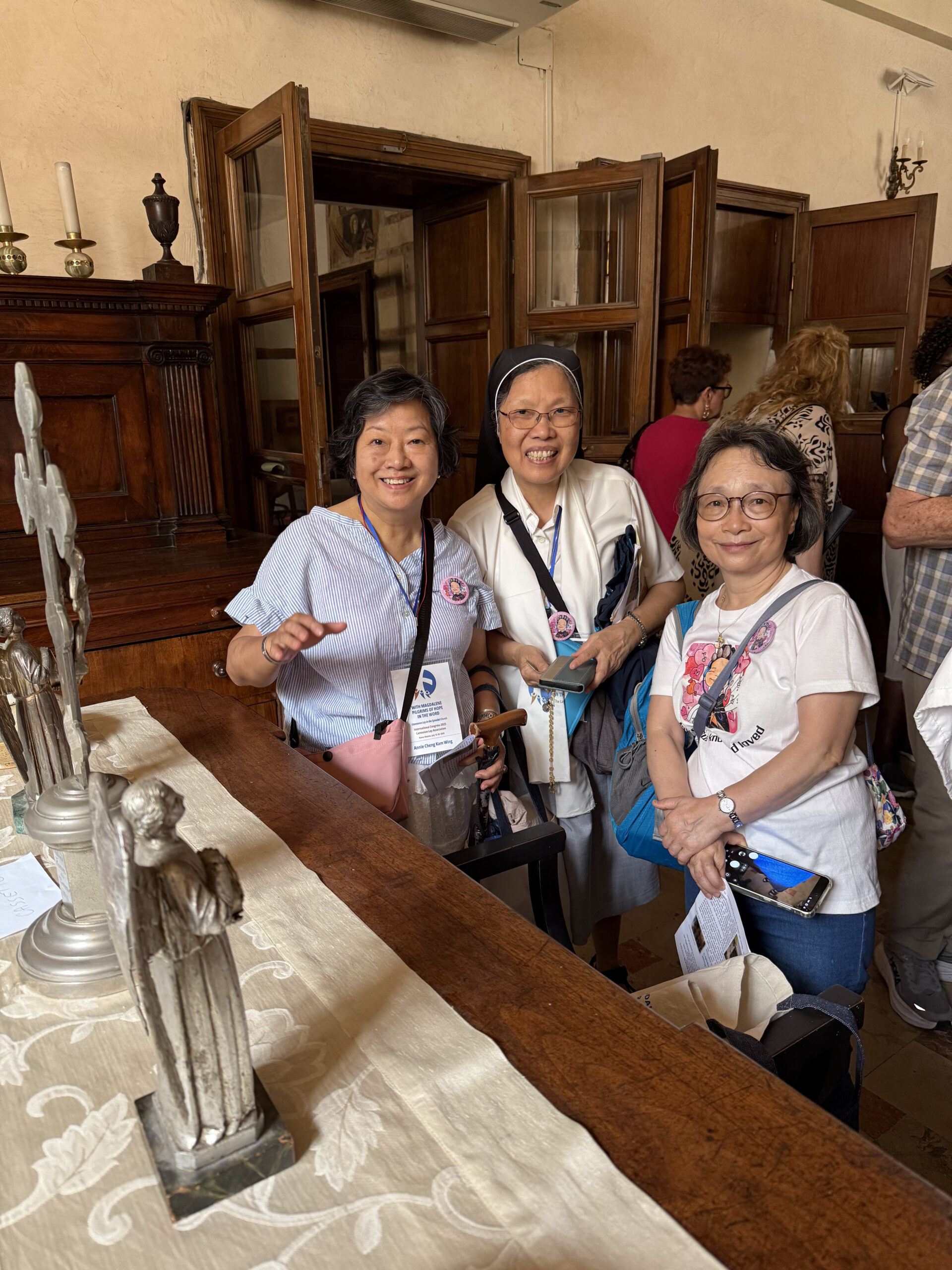
At the break of a glowing dawn, with the Roman hills still veiled in shadow and silhouetted against the fading night, the coach carrying participants of the International Congress of Canossian Lay Members departs from the General House in Ottavia. The journey has a double destination: Schio and Verona. Hearts are filled with gratitude for the week just passed, and the atmosphere brims with fraternal joy. Prayers rise alongside smiles, spontaneous songs echo through the bus, and faces reflect the warmth of both new and long-standing friendships, deeply rooted in Canossian values.
Schio: Encountering Bakhita
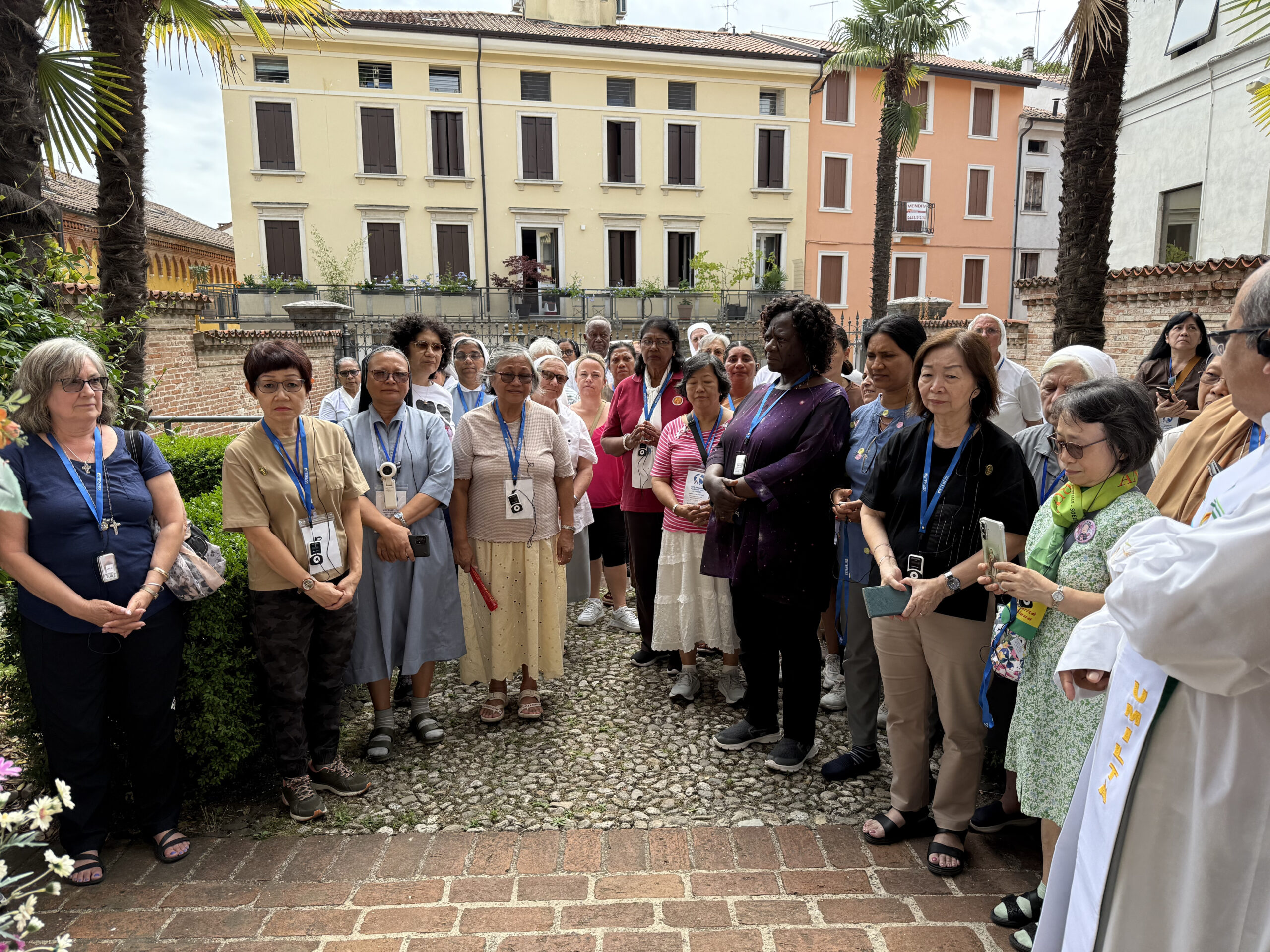
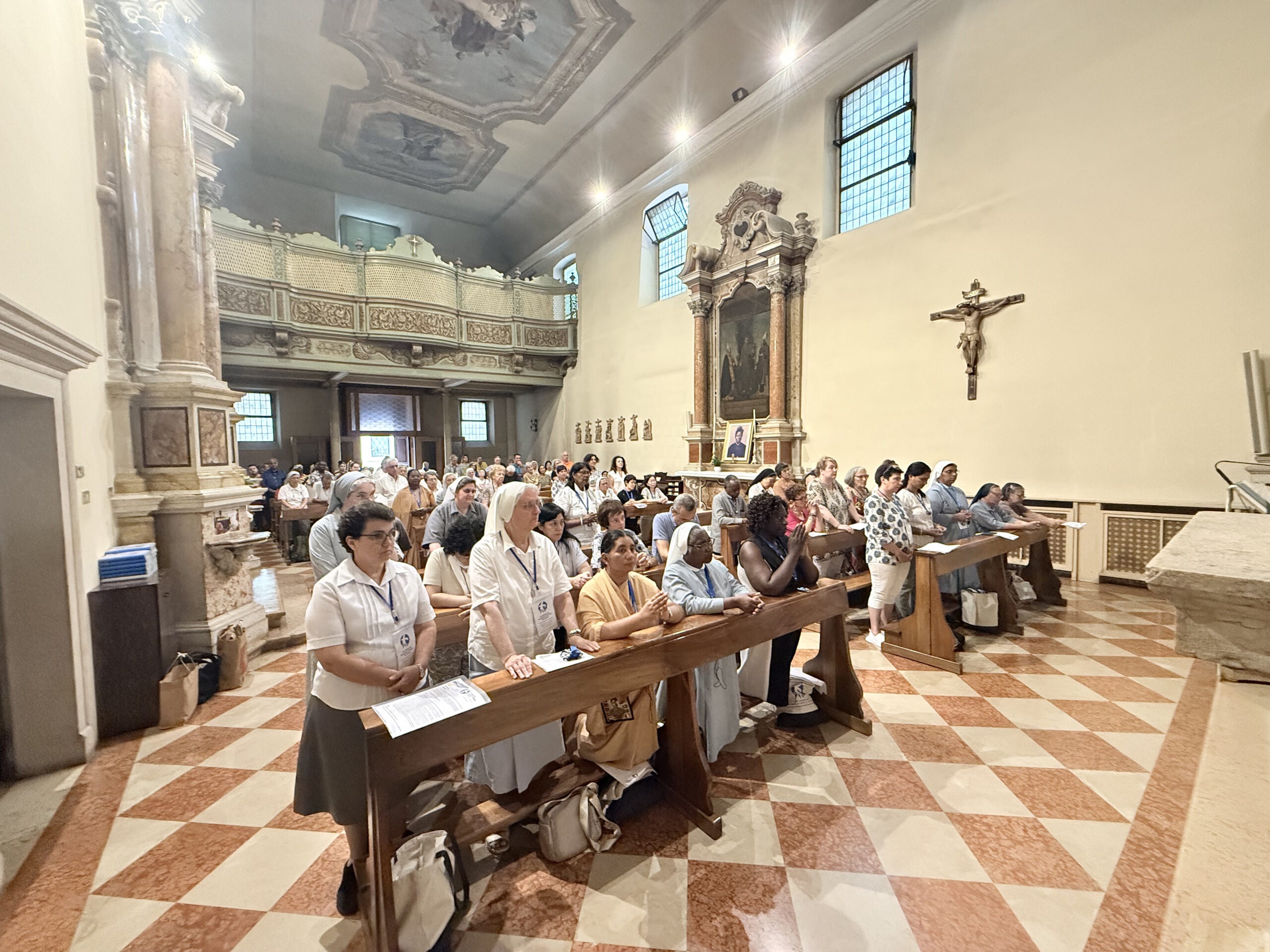
In Schio, the Sisters of the local community welcome the group with warmth, kindness and simplicity. It is the love of Maddalena made tangible—in a table set with fresh fruit, cool drinks and coffee. Small things, full of meaning. A welcome multiplied by a kaleidoscope of languages. Divided into small groups, the pilgrims make their way to the Sanctuary of Bakhita. There, within walls steeped in history and prayer, they retrace the powerful testimony of a woman who walked through unimaginable suffering to embrace the freedom of the spirit. Her life—vividly recounted and preserved in the museum dedicated to her—speaks, moves, and awakens.
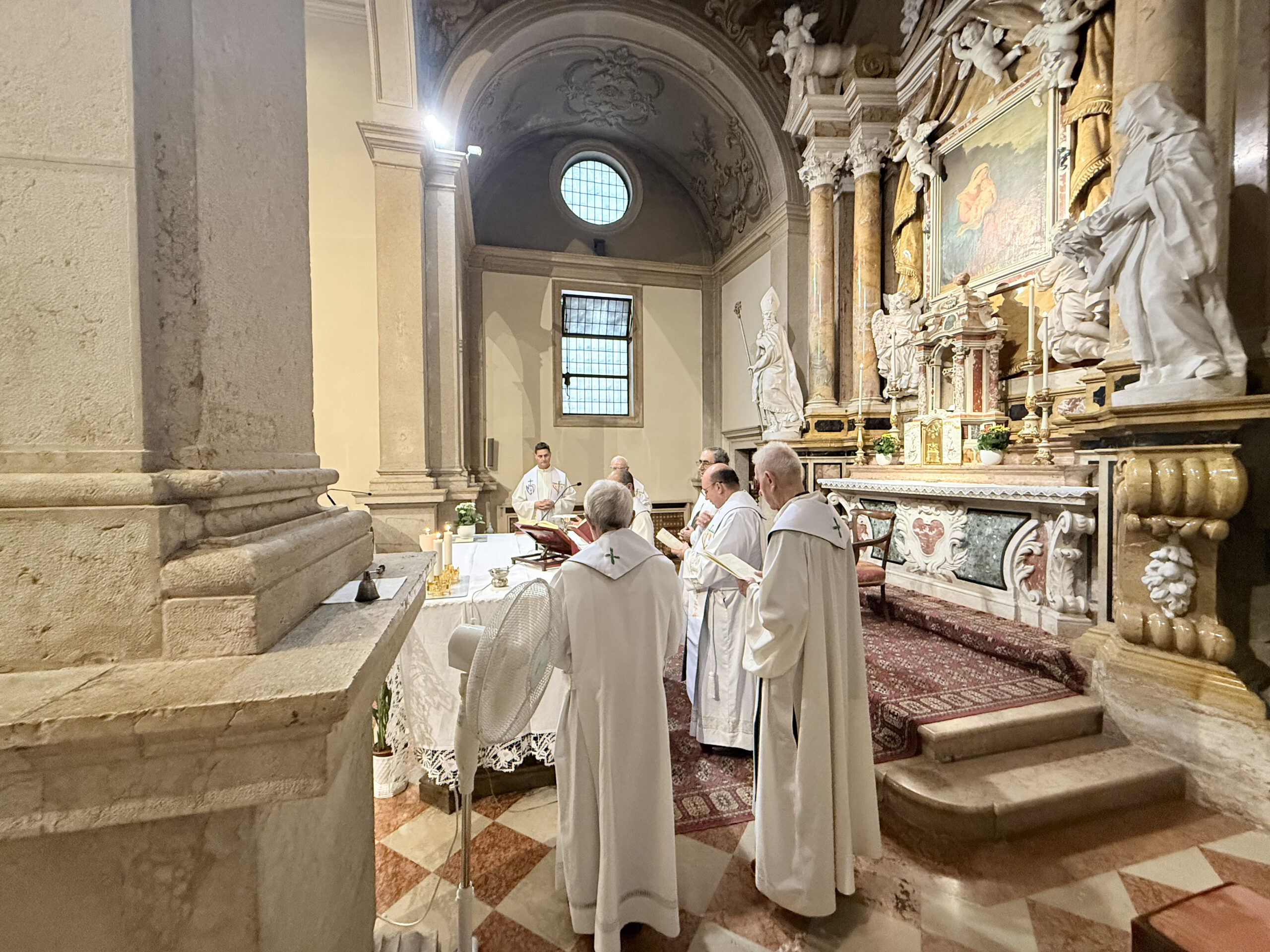
The Holy Mass, celebrated by Father Francesco Vercellone and Father Augusto Oliveira, becomes a moment of deep communion. Bakhita’s presence is felt palpably among the faithful, as her life becomes a living message of hope—both for the Canossian mission and for the personal stories of each pilgrim gathered in prayer.
Verona: In the Heart of the Origins
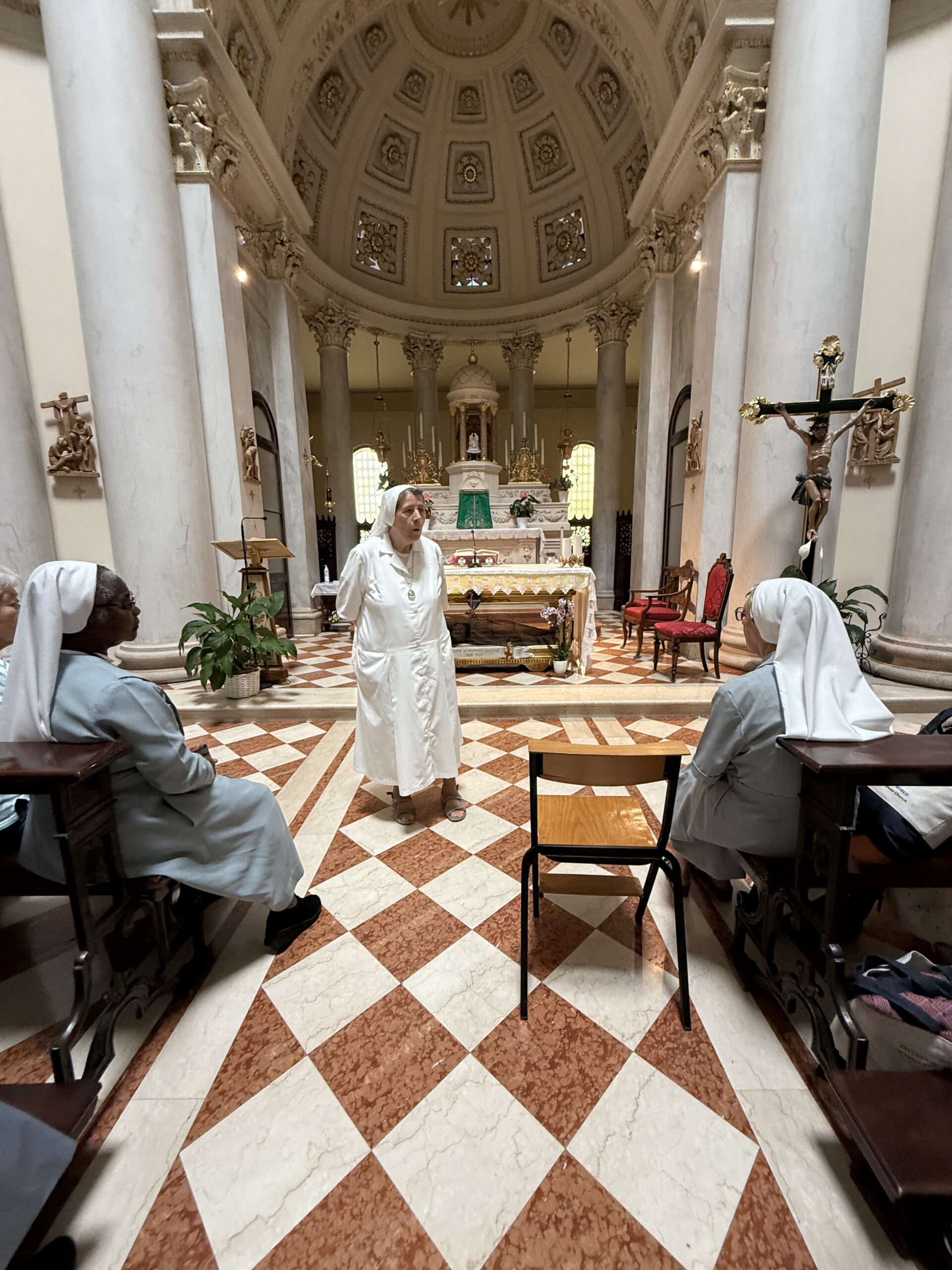
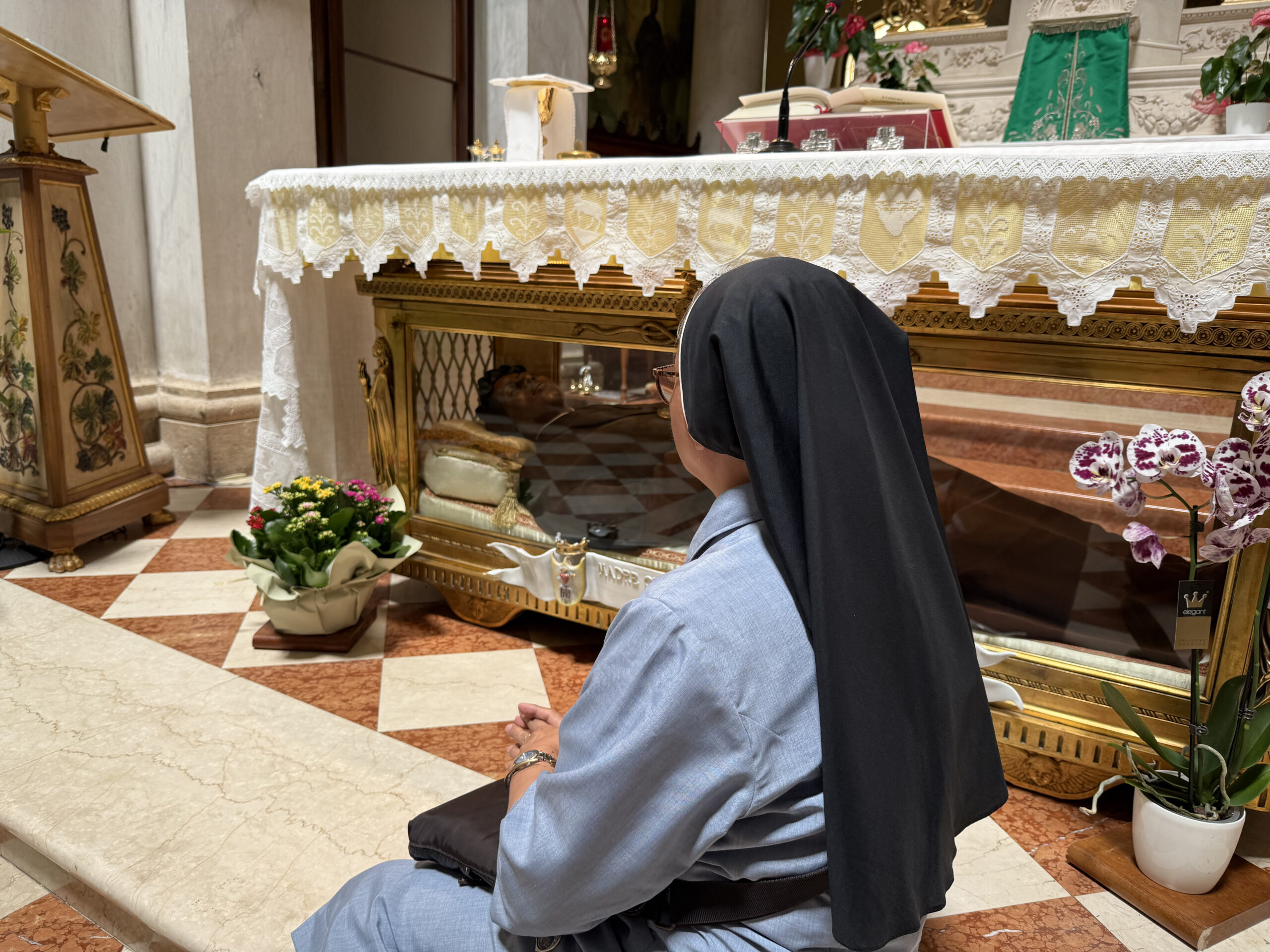
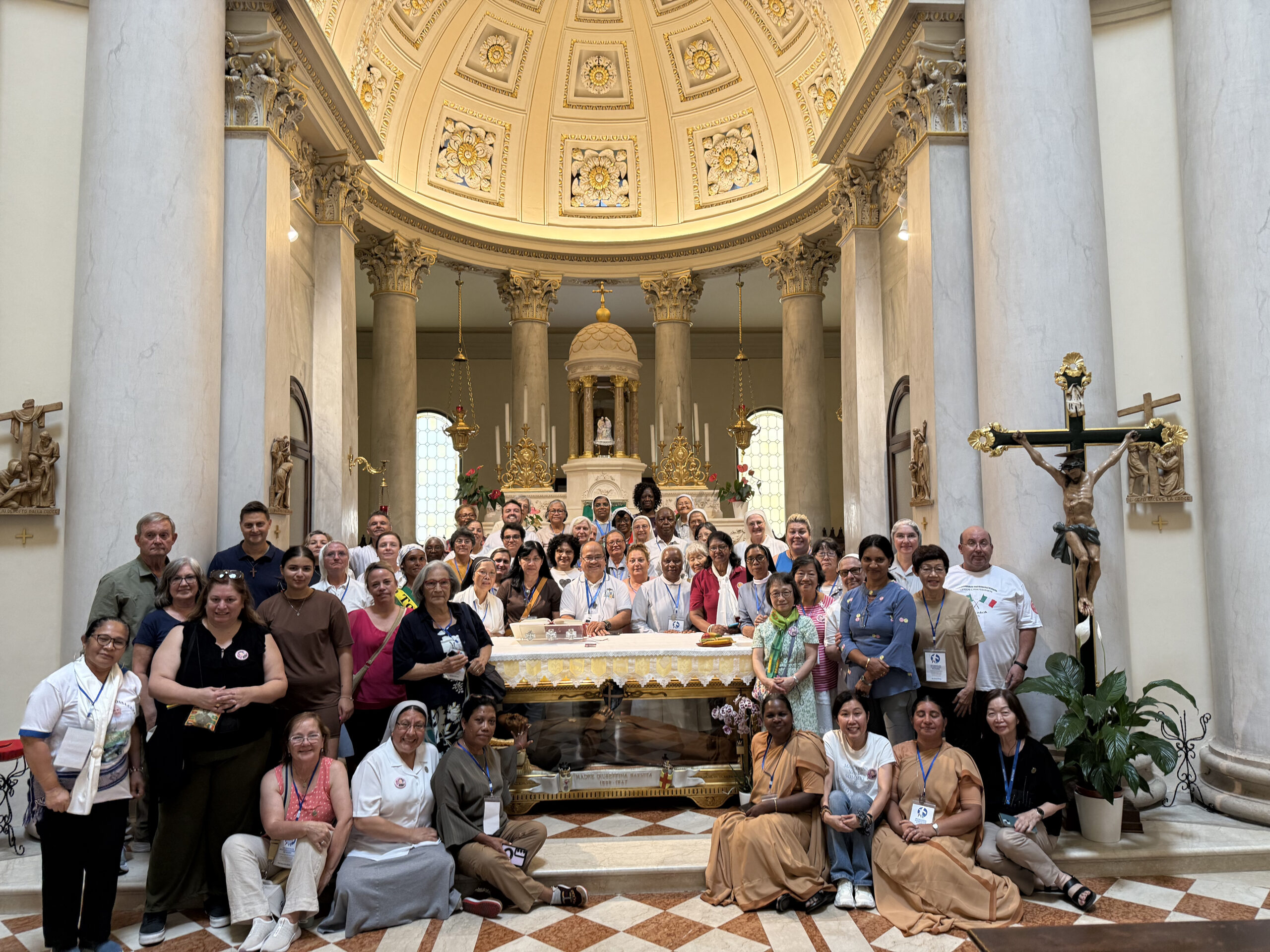
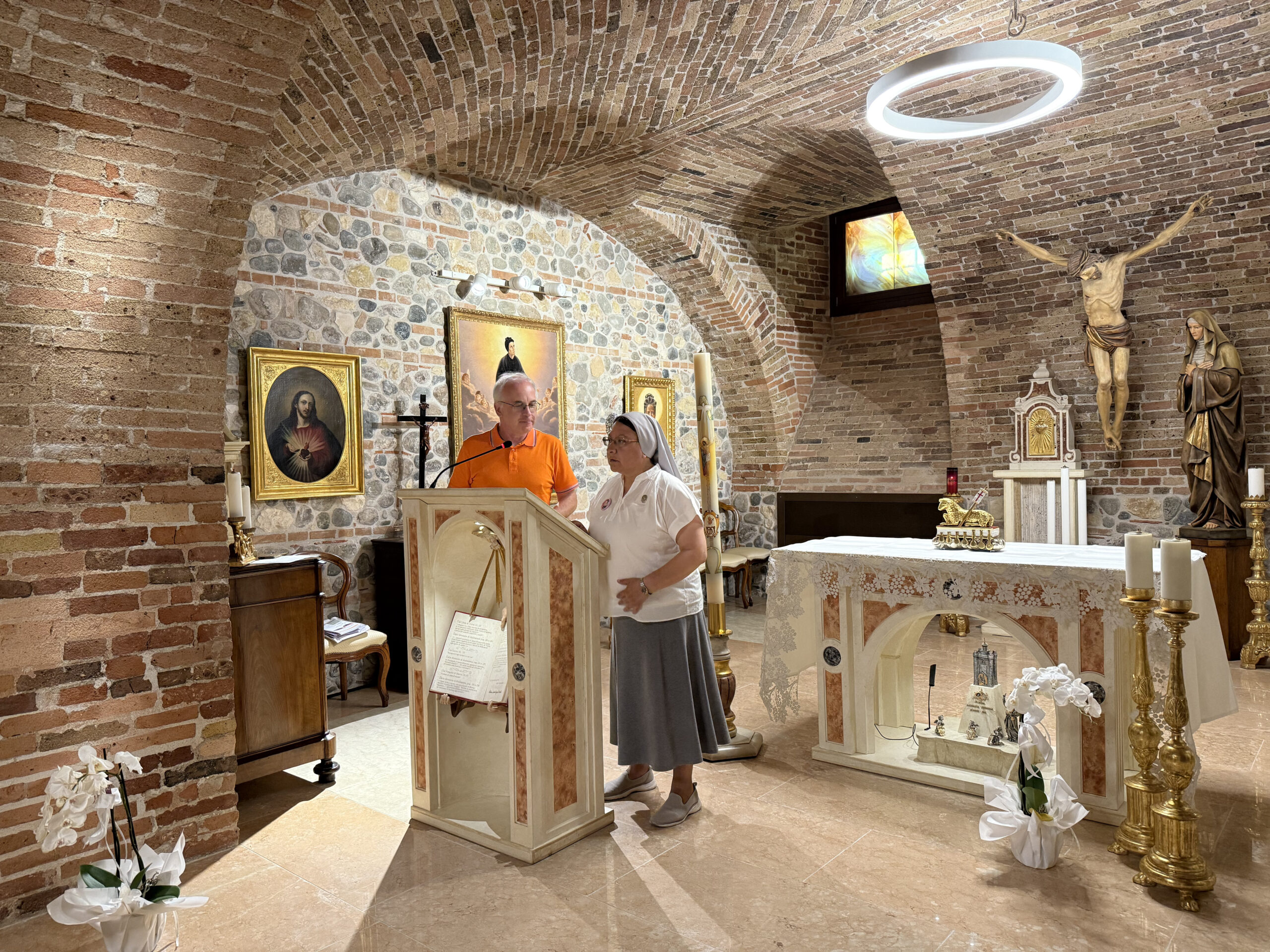
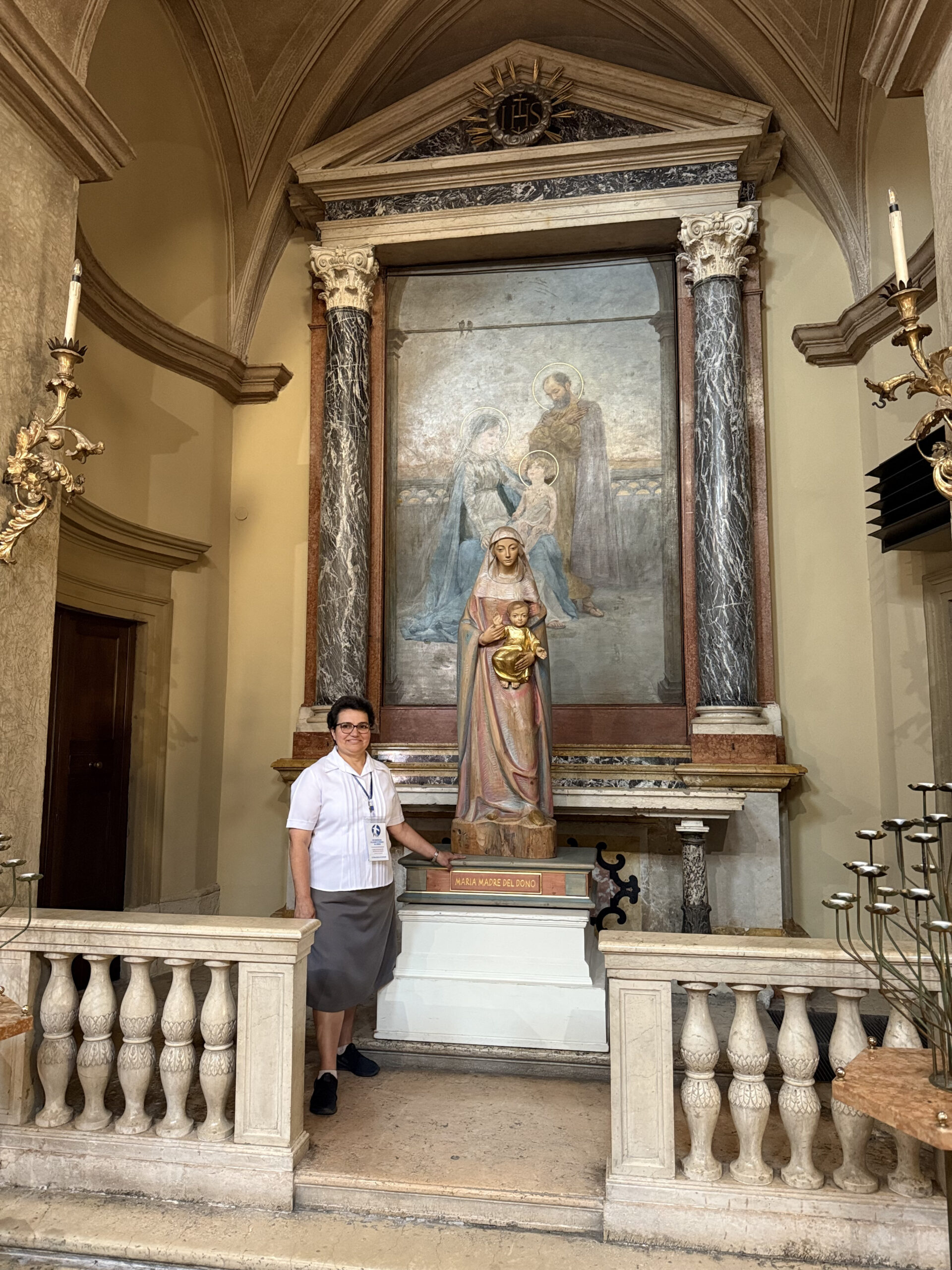
The journey continues to Verona, to the Mother House, where it all began. The group enters reverently into the ancient convent gifted to Maddalena by Napoleon himself, walking through the very walls where the history of the Canossian Mothers was born. The first stop: the chapel housing the body of St. Maddalena of Canossa. Devout gazes settle on her resting place. Some are moved to tears, others kneel in silent prayer, and many capture a photo to carry her memory back across the world. The Canossian charism still speaks—clearly, and powerfully.
The visit continues deep into the convent, to the modest room where Maddalena lived and where, kneeling in prayer, she ended her earthly journey. A simple space, striking in its humility—a stark contrast to her noble birth and the grandeur of Palazzo Canossa. A room that tells the story of a life of radical service and unwavering faith.
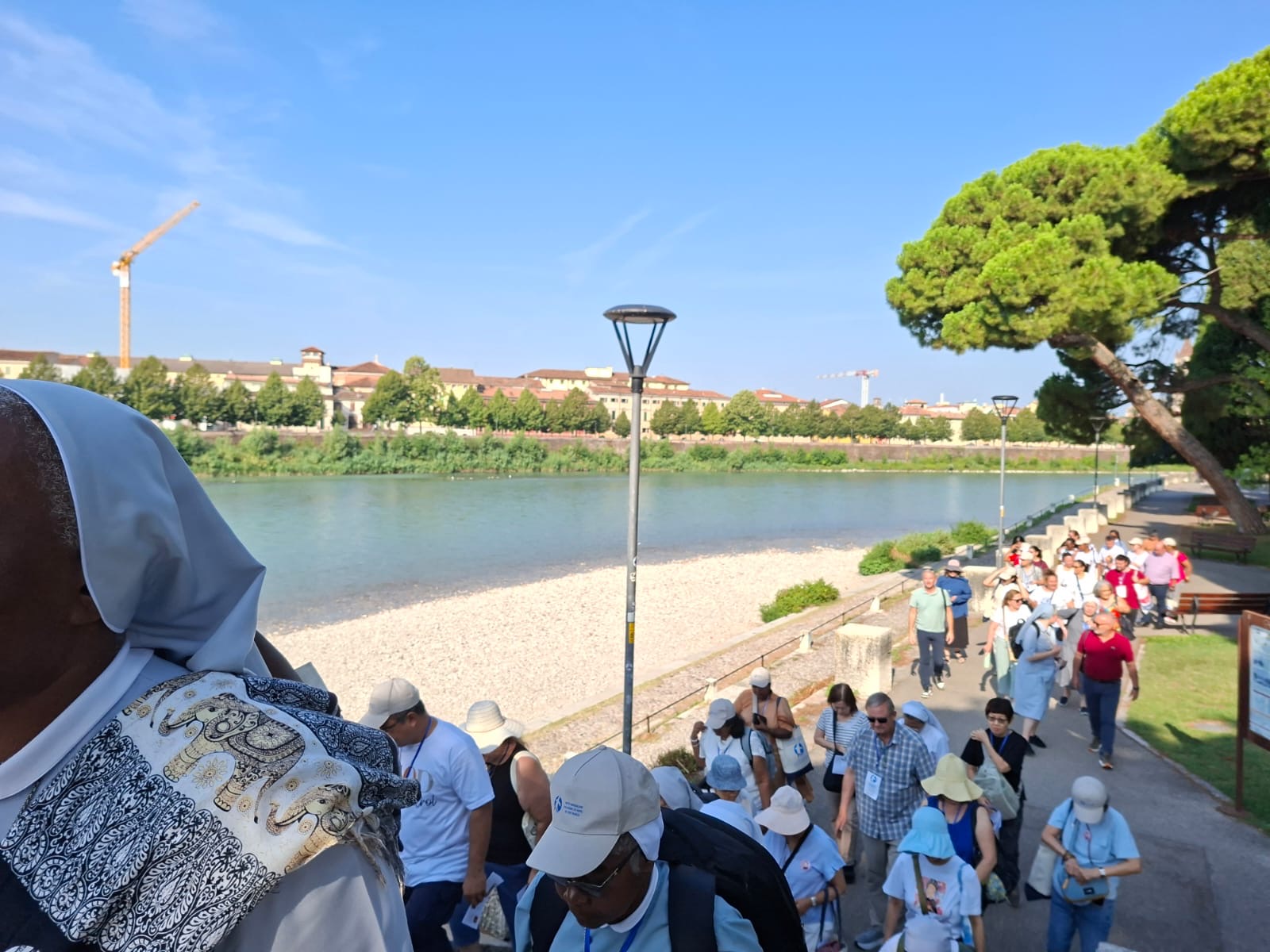
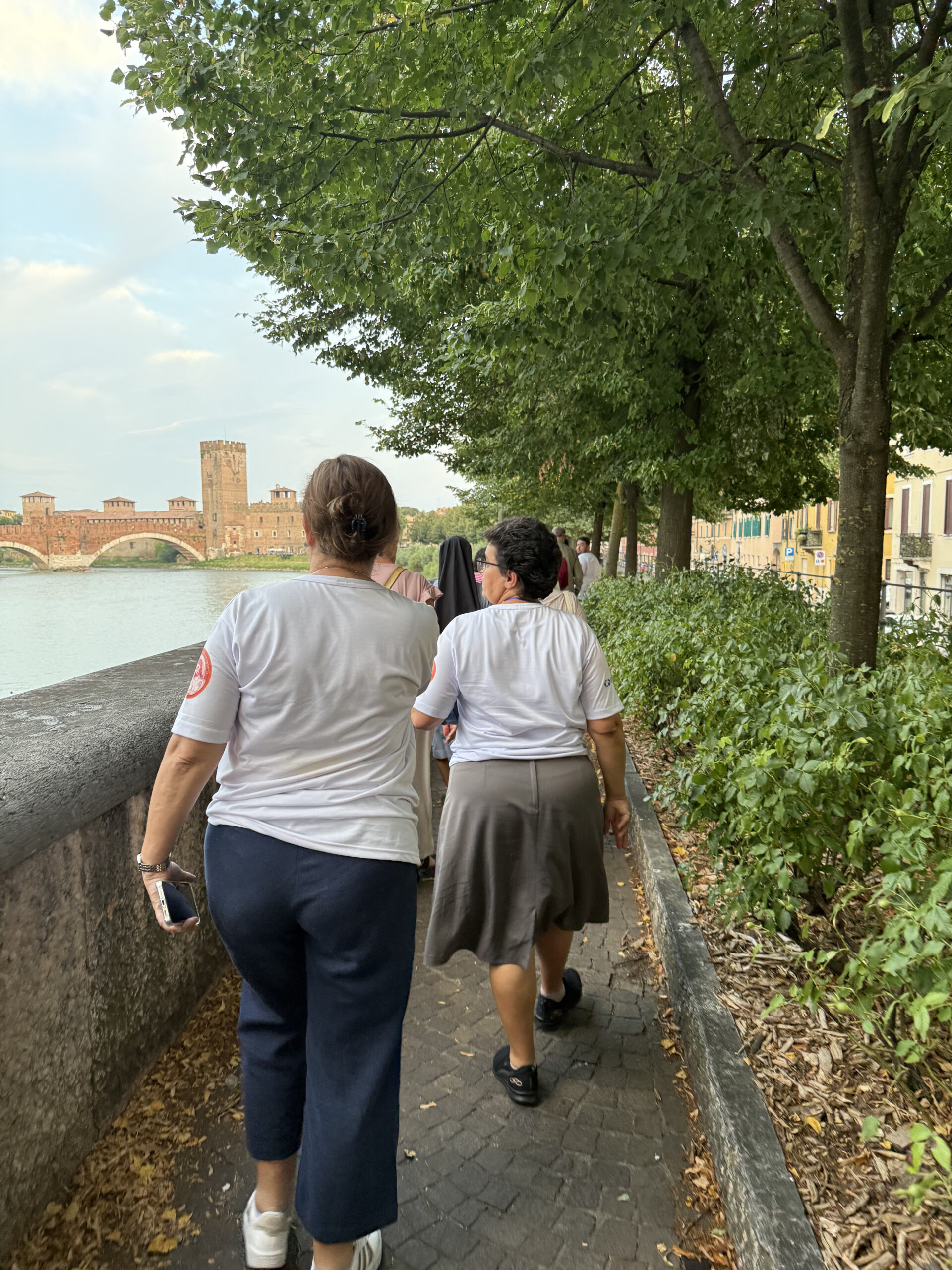
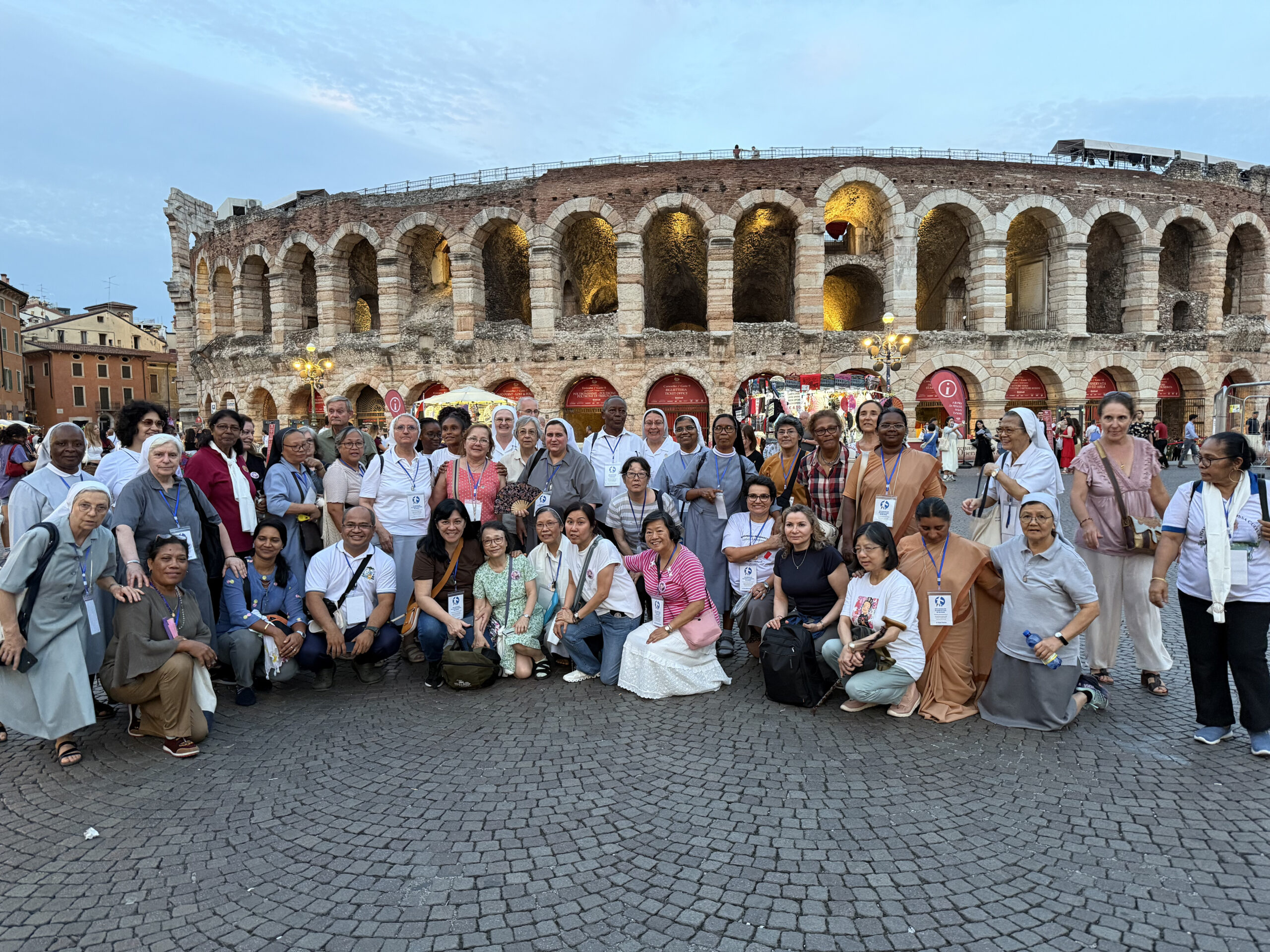
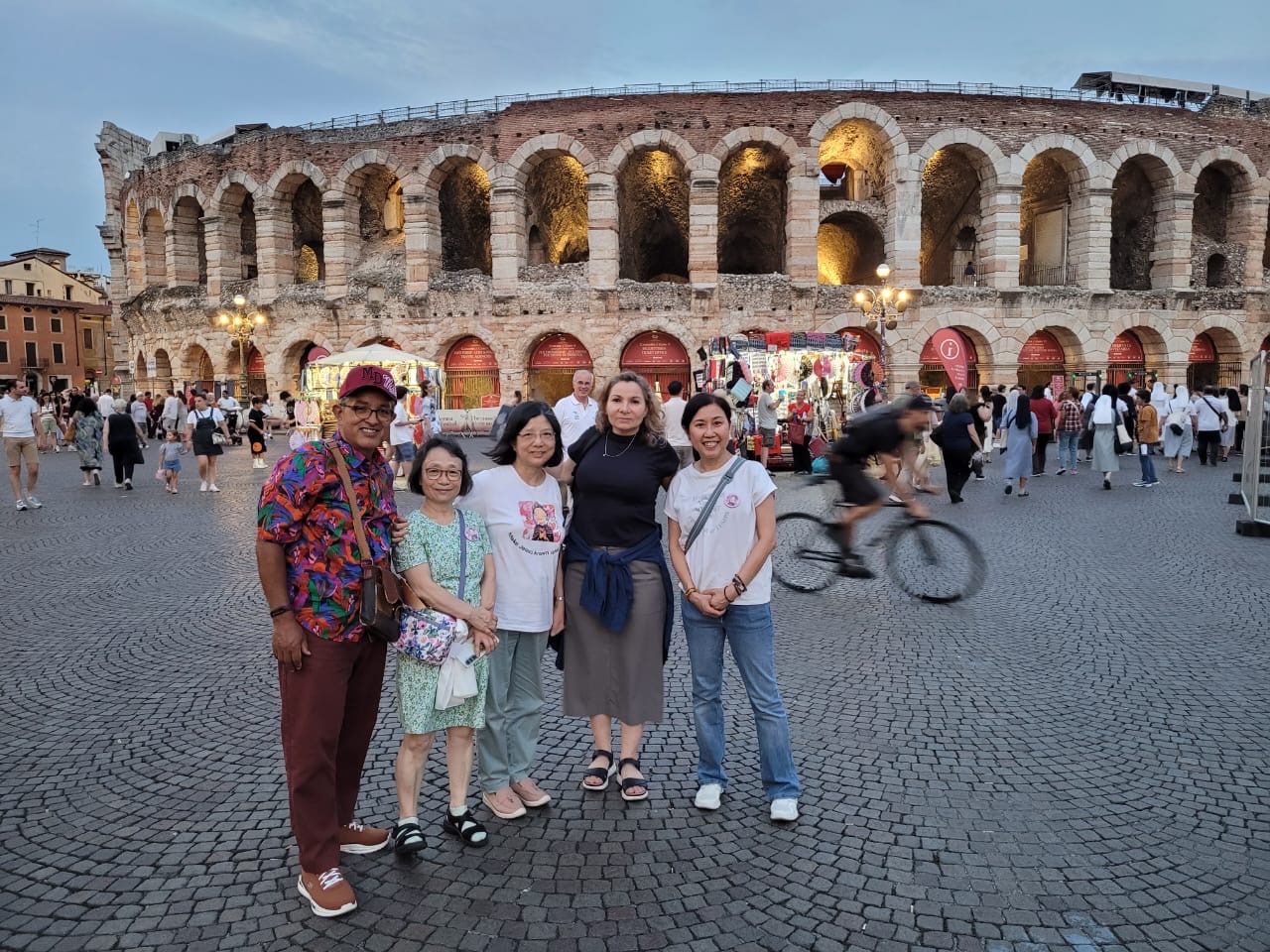
The evening concludes with a communal dinner and a night tour of Verona organized by the Fratelli e Sorelle Canossiani Association. The city unveils its ancient beauty in an atmosphere where history, art, and spirituality gently intertwine: from the evocative Castelvecchio, with its arrow slits overlooking the Adige River, to the Arena, radiant and alive in the summer night.
Between Beauty and Gratitude
The following day, the group visits Palazzo Canossa and the Chapel dedicated to the Foundress, lovingly restored by the Fratelli e Sorelle Canossiani Association. The welcome is sincere, heartfelt, and fraternal. Sisters, Fathers, and lay members move as one, accompanied by those who safeguard the legacy and carry the mission forward.
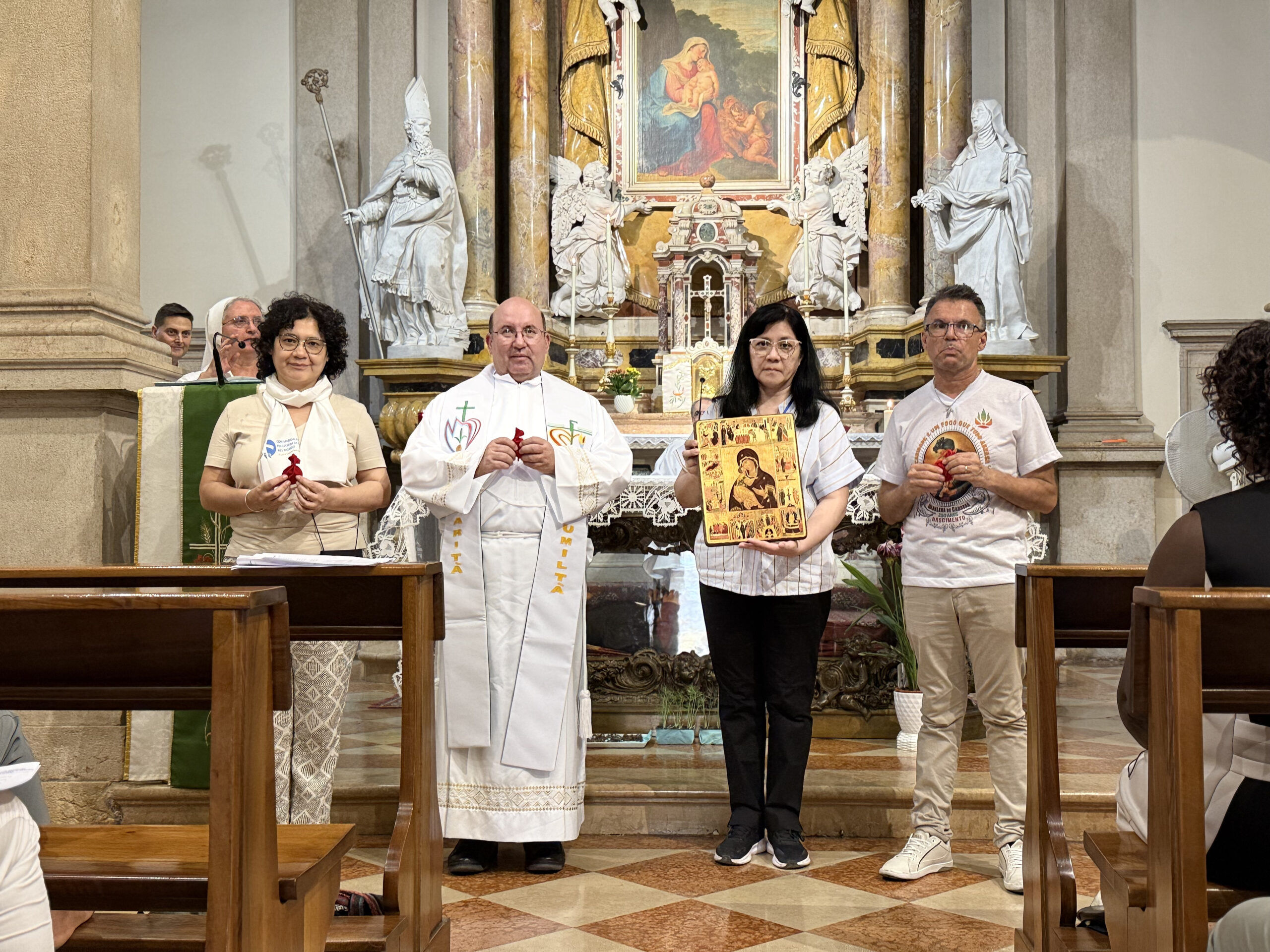
Lunch at the General House in Verona becomes another rich moment of communion, culminating in a solemn Mass celebrated by Father General Carlo Bittante, surrounded by Canossian priests from around the world. In a deeply multicultural liturgy—where canonical rites intertwine with Indian lay dances, and hymns sung by Sisters and laypeople alike—thanks are offered for the journey taken, new international team members are welcomed, and each participant receives a gift: a sign of belonging, and a blessing.
The pilgrimage concludes with a visit to the Basilica of San Zeno, a Romanesque masterpiece from the 11th century, which invites the soul to contemplation and praise.
Rome in the Heart, Mission in the Hands
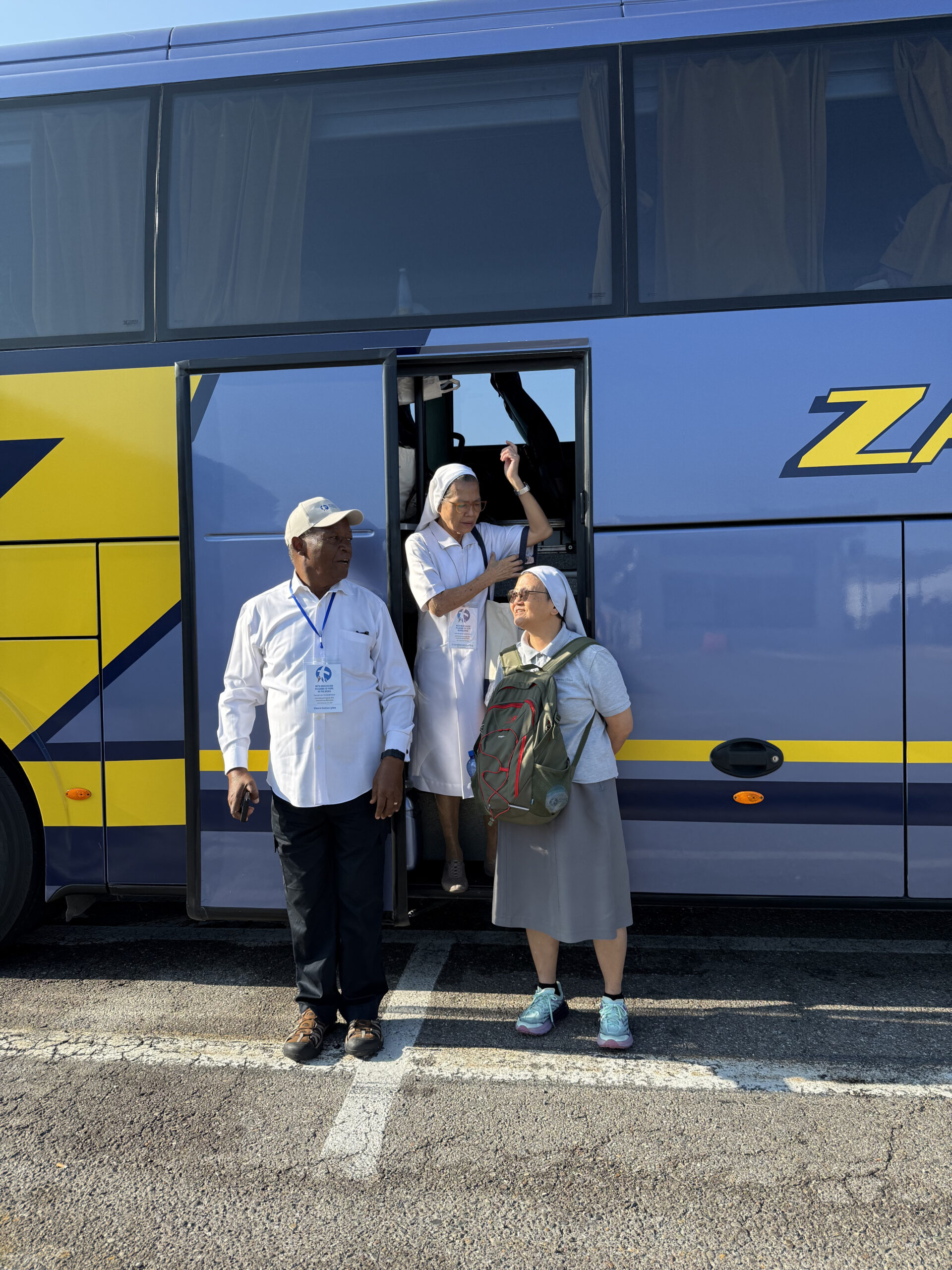
Later that afternoon, the coach begins the return journey. But Rome is now just a point on the map—the real journey continues within. Schio and Verona have left their mark on the hearts of all who walked those sacred paths. This pilgrimage is far more than a physical route: it is a spiritual experience that reawakens the Canossian lay vocation.
The faces, the words, the places, the silences: everything becomes living memory. And from this day forward, that memory becomes mission—in the hands and gestures of those who have walked in the footsteps of Maddalena and Bakhita.
📍 Palazzo Canossa – Verona
Majestic and refined, Palazzo Canossa rises in the heart of Verona and stands as one of the city’s finest examples of Renaissance architecture. Built in the 16th century by the noble Canossa family, the palace is intimately tied to Maddalena’s early life, where she spent her childhood and youth before surrendering her noble privileges to serve the poor.
The façade is sober yet stately, featuring elegantly framed windows and an inner courtyard still echoing with the aristocratic grace of a bygone era. Inside, the Chapel of St. Maddalena of Canossa, now lovingly restored, welcomes visitors with a silence bathed in light and prayer. It is a spiritual refuge—where past and present converge to bear witness to a woman who transformed privilege into a life of generous service.
⛪ Basilica of San Zeno – Verona
A jewel of European Romanesque architecture, the Basilica of San Zeno captivates with its perfect harmony and its atmosphere of serene grandeur. Built between the 11th and 12th centuries, the church stands atop the resting place of St. Zeno, beloved bishop of Verona and the city’s patron saint.
The façade, composed of tuff and brick, is simple yet richly symbolic: the large rose window—known as the Wheel of Fortune—opens into a sacred space where faith and art converge. Inside, the three naves rest on sturdy columns and shelter medieval frescoes, intricately carved capitals, and above all, the high altar adorned with Andrea Mantegna’s altarpiece, a Renaissance masterpiece depicting the Virgin enthroned among saints.
Descending into the crypt, one finds the tomb of St. Zeno: a space of profound spirituality—humble, timeless, and disarmingly powerful.
🔸 The Silence that Speaks: The Story of Bakhita
They call her the “African Saint”, but for those who listen with their hearts, Bakhita is much more: she is the voice of the forgotten, the transfigured face of suffering turned to grace. Born in Sudan, kidnapped as a child, and sold repeatedly into slavery, Giuseppina doesn’t even remember her birth name. “Bakhita”—meaning lucky in Arabic—is the name given to her by her captors. A cruel irony for a girl who endured beatings, chains, and dehumanization. And yet, in that name lies a hidden truth.
When she finally reaches Italy and meets the gentle, unwavering love of the Canossian Sisters, something ignites. She learns to call God “Father”, and discovers that she is a daughter—loved, always. With disarming humility, she forgives those who took everything from her, and offers everything she has to others. She chooses the path of quiet service, the one with open doors and silent smiles.
Those who approach her feel peace. Those who look upon her are moved to tears, often without knowing why. Because in her, the Gospel takes flesh: a strength born of forgiveness, a freedom forged in love. In the Sanctuary of Schio, before her tomb, the heart softens. No words are needed. Just silence—and tears. The beautiful kind. The kind that cleanse the soul and make space for hope.
IMG_3585
IMG_3588

IMG_3635
IMG_3617
IMG_3613
IMG_3659
IMG_3674

1ee72980-9751-40f6-a21f-312d5f8d6292
IMG_3718
53771be7-ddbb-4704-affe-41669db006f3
IMG_3919

IMG_3925

IMG_3934
IMG_3945
d38c932a-f04d-483a-b618-29c92f939977

IMG_4010
IMG_4006
IMG_4025
IMG_4030
IMG_3699
IMG_4246
IMG_4248