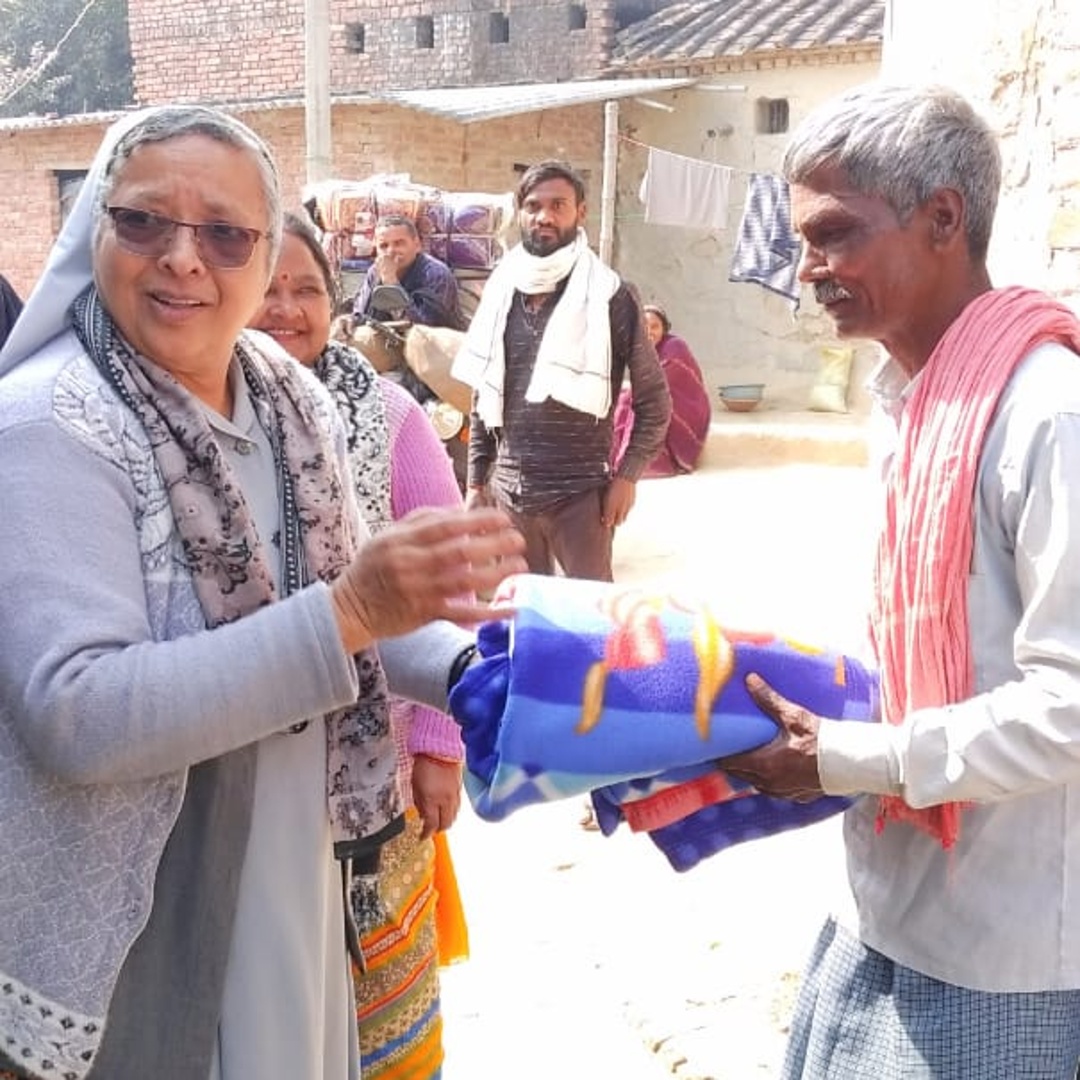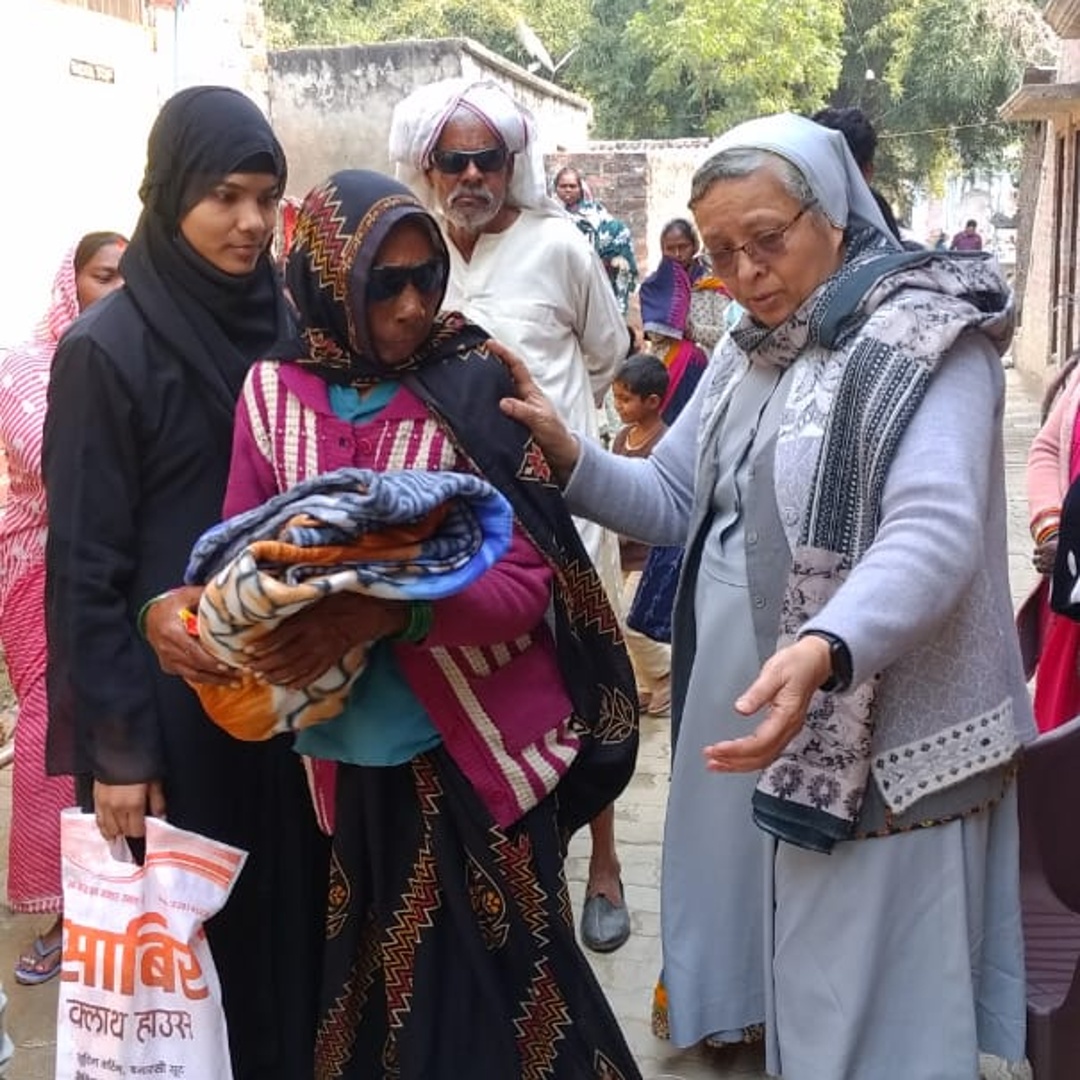
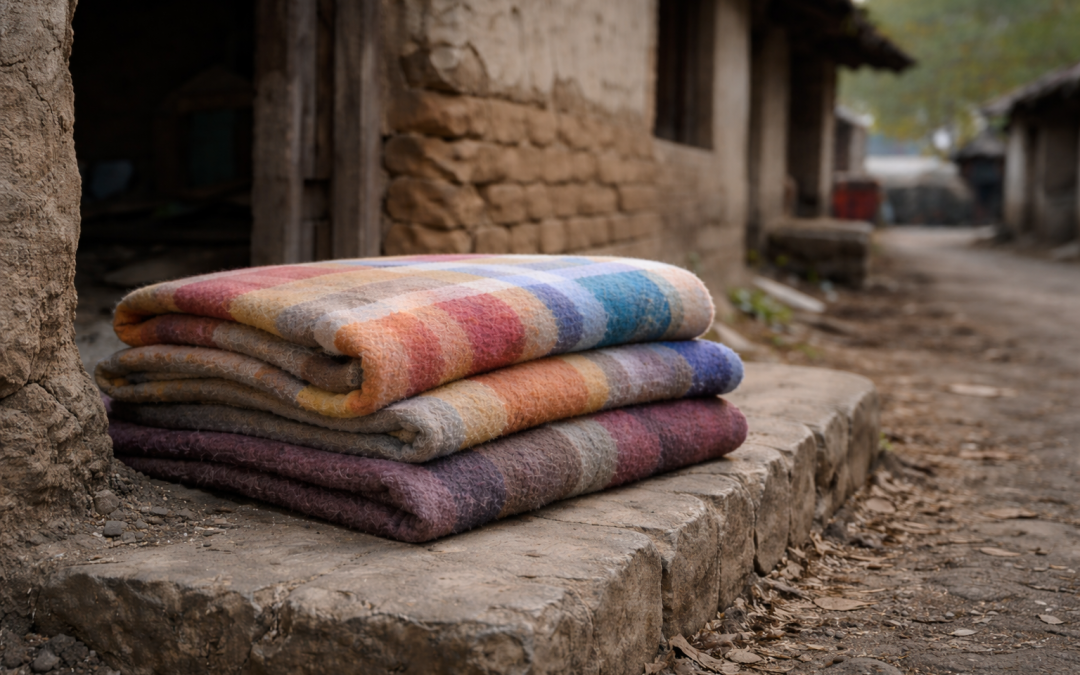
When the cold arrives, the most vulnerable always pay the highest price. This is true in Faizabad, in northern India, where winter slips through thin doors and glassless windows, making the nights especially harsh for the elderly and for those living in precarious conditions. It was from this reality that the Canossian Sisters conceived the idea of distributing forty blankets in the surrounding villages — a simple gesture, born in response to an immediate need.
Yet over the course of the day, this gesture took on a deeper meaning. Each blanket became an opportunity for encounter and listening. The visits turned into quiet, honest accounts of the daily struggles faced by people rarely seen or heard. In communities marked by poverty and isolation, presence itself becomes a form of support. The day continued with visits to those who were ill and unable to leave their homes, a way of reminding them that they had not been forgotten and of offering a small but meaningful sign of hope.
In Faizabad, the warmth of a blanket became a symbol of care that supports both body and spirit — an approach that seeks to care for the most vulnerable in their entirety. This is the legacy taught by Saint Magdalene of Canossa, and one that continues to guide the Canossian family today.
Geopolitical and Social Context
Faizabad (now administratively part of the Ayodhya area), in the state of Uttar Pradesh, lies within a region of northern India marked by strong social and economic contrasts. Alongside processes of urban development and growing national visibility linked to the city’s cultural significance, vast rural areas continue to face widespread poverty, limited access to healthcare services, and inadequate housing conditions. The most vulnerable communities — particularly the elderly, women, and informal workers — are disproportionately exposed to the effects of extreme seasonal changes and economic instability. In this context, local initiatives of outreach and support play an essential role in strengthening social cohesion and responding to the everyday needs of those most at risk.